








What's Happening?
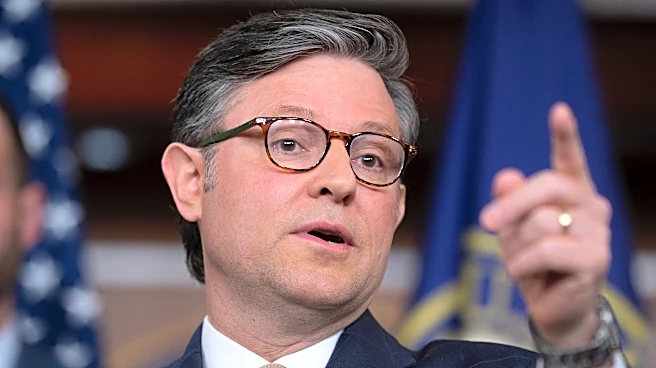
House Speaker Mike Johnson successfully advanced a controversial surveillance bill after overcoming resistance from fellow Republicans. The bill, which extends a warrantless surveillance program, faced opposition due to concerns over civil liberties.
Johnson managed to secure enough votes by negotiating procedural compromises, allowing the bill to pass the House and move to the Senate. The bill's passage is part of a broader legislative effort that includes funding for the Department of Homeland Security and U.S. farm policy.
Why It's Important?
The passage of the surveillance bill highlights the challenges faced by Speaker Johnson in managing a divided Republican caucus. The bill's advancement is crucial for the intelligence community, which argues that the surveillance program is essential for national security. However, it also raises concerns about privacy and civil liberties, reflecting ongoing debates about the balance between security and individual rights. The outcome of this legislative effort could impact future policy decisions and the political landscape as the midterm elections approach.
What's Next?
The surveillance bill will now be considered by the Senate, where it may face further debate and potential amendments. The ongoing discussions around the bill and related funding measures will continue to test the unity and strategy of the Republican leadership. The outcome will also influence the operations of the Department of Homeland Security, which has been without new funding for over two months.