

What's Happening?
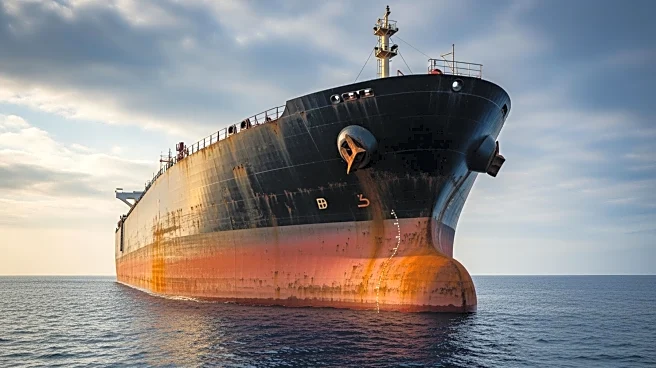
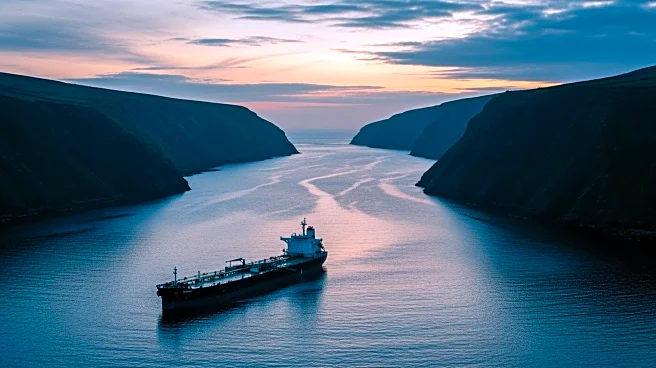
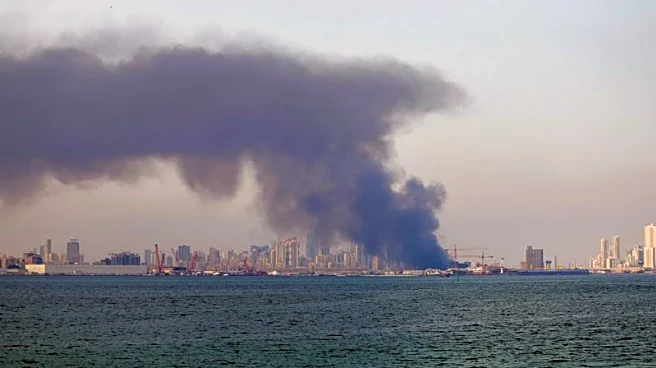
The ongoing conflict between the U.S., Israel, and Iran has led to significant disruptions in the Strait of Hormuz, a vital waterway for global oil and liquefied natural gas (LNG) transport. The strait sees the passage of approximately 21 million barrels
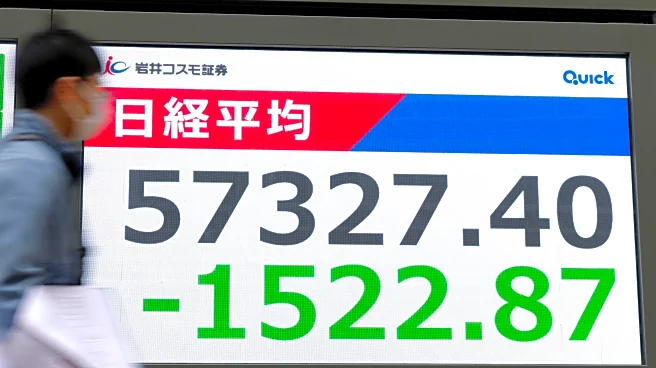
of oil daily, accounting for 21% of global supply. Recent attacks have damaged commercial vessels, prompting insurers to withdraw coverage and major carriers to reroute traffic. This has resulted in a substantial decrease in vessel passages, affecting global oil and LNG flows. The conflict has also led to a surge in Brent Crude prices by 13% and European natural gas prices by 24%.
Why It's Important?
The disruption in the Strait of Hormuz poses a strategic risk to global energy markets, particularly for import-dependent economies. Elevated oil and gas prices can lead to inflationary pressures, eroding industrial competitiveness and complicating fiscal stability in key partner economies. The Gulf region's role in nitrogen-based fertilizer production means that disruptions could also impact global food prices, with potential political stability implications in import-dependent regions. Developing countries lacking fiscal buffers are particularly vulnerable to these price increases, which could exacerbate existing economic challenges.
What's Next?
The duration and geographic spread of the conflict will determine the broader economic consequences. A rapid diplomatic de-escalation could stabilize energy prices and restore normal shipping patterns. However, prolonged instability could sustain high oil and gas prices, driving inflation and increasing pressure on energy-importing developing countries. The situation may also lead to currency pressures and fiscal stress in fragile markets. International efforts to mediate and resolve the conflict will be crucial in mitigating these risks and ensuring global economic stability.