






What's Happening?
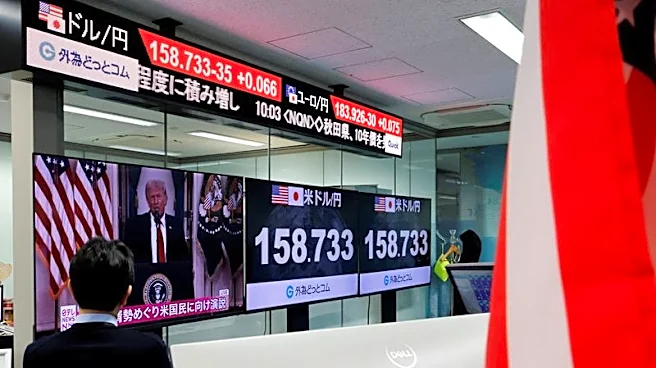
President Trump has confirmed that the US is contemplating a currency swap with the United Arab Emirates (UAE) as part of a broader financial assistance strategy. This consideration arises from discussions between the UAE's central bank governor and US financial officials,
aimed at mitigating potential economic fallout from the ongoing conflict involving the US, Israel, and Iran. President Trump acknowledged the UAE as a valuable ally and expressed willingness to support them financially if needed. Despite these talks, UAE officials maintain confidence in their economic stability, dismissing the need for external financial aid.
Why It's Important?
The proposed currency swap underscores the strategic importance of the UAE to US foreign policy, particularly in the context of Middle Eastern geopolitics. It reflects the US's commitment to supporting its allies amidst regional instability. For the UAE, securing a currency swap could provide a financial safety net, ensuring economic resilience against potential disruptions caused by geopolitical tensions. This move could also influence global oil markets, given the UAE's role as a major oil exporter, potentially stabilizing prices and supply chains.
What's Next?
Should the currency swap be implemented, it may pave the way for deeper economic ties between the US and UAE. The decision could trigger responses from other regional players, potentially reshaping alliances and economic strategies in the Middle East. US policymakers will need to consider the domestic economic implications and the broader geopolitical landscape, particularly in relation to Iran. The outcome of these discussions could set a precedent for future financial collaborations with other nations facing similar challenges.