


What's Happening?
The World Governments Summit Organization is set to host its Latin America and the Caribbean Dialogue in Cap Cana, Dominican Republic, on November 20 and 21. This event, organized in partnership with the Government of the Dominican Republic and the Center
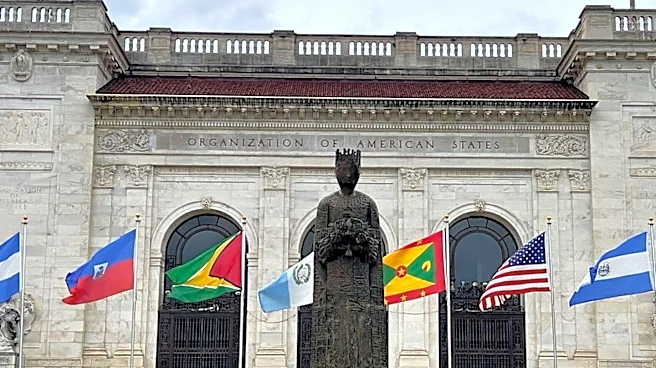
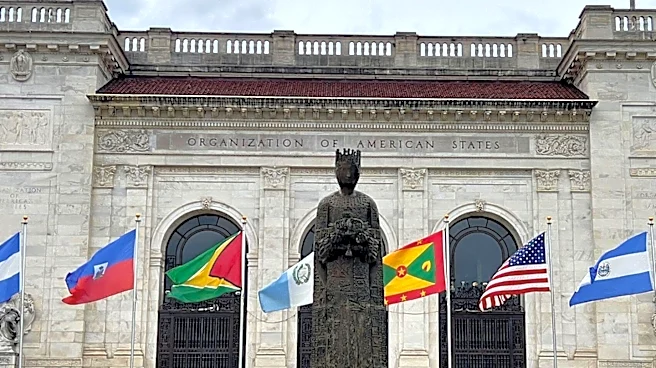
for Analysis for Public Policies (CAPP), will be held under the patronage of Luis Abinader, President of the Dominican Republic. The agenda includes 35 sessions and 15 high-level meetings, featuring over 70 speakers and representatives from more than 30 countries, alongside 120 private-sector companies. Key themes for discussion include geoeconomics and strategic investment, tourism, culture and experience economies, international cooperation and regional integration, the future of government, logistics and global connectivity, and human capital and the future of work. Albert Ramdin, Secretary-General of the Organisation of American States (OAS), is among the notable participants.
Why It's Important?
This dialogue provides a critical platform for leaders from Latin America and the Caribbean, along with global counterparts, to address pressing regional and international issues. The focus on geoeconomics, strategic investment, and regional integration is particularly significant for the U.S., given its strong economic and political ties to the region. Enhanced cooperation and investment opportunities discussed at the summit could lead to increased trade, stability, and economic growth in countries vital to U.S. interests. Discussions on the future of government and human capital development could also influence governance models and workforce readiness, impacting regional stability and potential for collaboration with U.S. initiatives. The participation of the OAS Secretary-General underscores the importance of multilateral institutions in fostering dialogue and addressing shared challenges, including threats to peace and regional security.
What's Next?
The dialogue is expected to foster new partnerships and strengthen existing ties between the UAE, Latin America, and the Caribbean, potentially leading to increased foreign direct investment and collaborative projects. Specific outcomes may include agreements on improving air connectivity to boost tourism, strategies for turning natural resources into national wealth, and initiatives to enhance government efficiency and public services through technology and innovation. The discussions on regional cooperation and the future of societies could also lay the groundwork for more integrated approaches to shared challenges. The insights gained from sessions on AI, investment, and new economic frontiers are likely to inform policy decisions aimed at preparing the region for rapid global changes and leveraging emerging opportunities for sustainable development.
Beyond the Headlines
Beyond the immediate policy discussions, this summit reflects a growing trend of non-traditional global actors, such as the UAE, increasing their engagement and influence in Latin America and the Caribbean. This expanded engagement could diversify economic partnerships for the region, potentially reducing its historical reliance on traditional partners. The emphasis on 'zero-bureaucracy government' and leveraging AI for public services highlights a forward-looking approach to governance that could inspire reforms across the region. Furthermore, the dialogue's focus on cultural and experience economies, alongside traditional economic sectors, signals a recognition of the multifaceted nature of development and the importance of soft power. The discussions on 'Threats to Peace' with the OAS Secretary-General also underscore the enduring geopolitical complexities and the need for diplomatic solutions in the region.