
What's Happening?
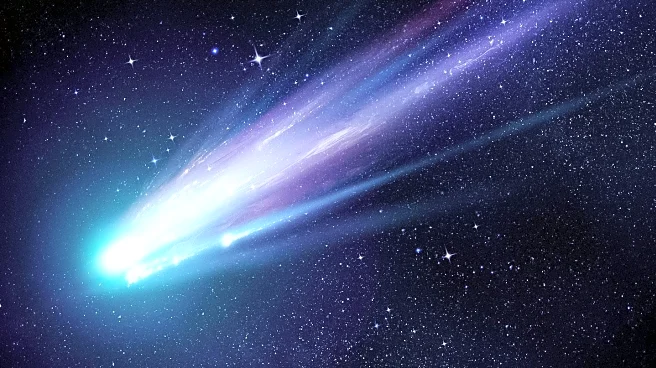
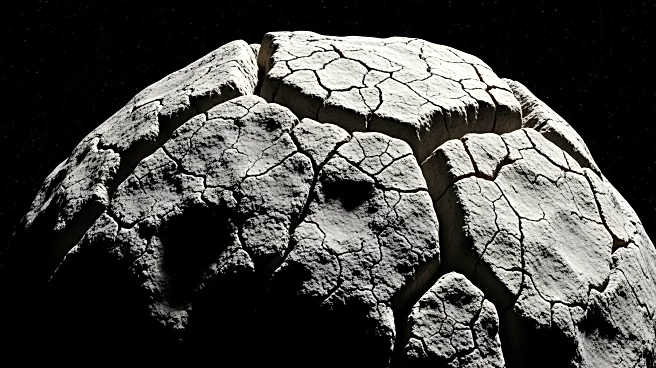
NASA's Hubble Space Telescope has unexpectedly captured the fragmentation of comet C/2025 K1 (ATLAS), a rare event that occurred during a study initially targeting a different comet. The observation was made possible due to technical constraints that led
researchers to select K1 as a new target. The comet was observed breaking into at least four pieces, providing a unique opportunity to study its composition and the processes involved in its disintegration. This event offers insights into the primordial materials of the solar system, as comets are considered remnants from its formation.
Why It's Important?
The observation of comet K1's fragmentation by Hubble is significant for planetary science, as it allows researchers to study the unprocessed materials of the solar system. Understanding the composition and behavior of comets can provide clues about the early solar system and the processes that shaped it. This event also demonstrates the value of space telescopes like Hubble in capturing rare astronomical phenomena, contributing to our knowledge of celestial mechanics and the evolution of solar system bodies.
What's Next?
Researchers will continue to analyze the data collected from Hubble's observations to gain further insights into the comet's composition and the fragmentation process. The findings could lead to new theories about cometary behavior and the conditions that lead to their disintegration. Additionally, the study may inform future missions and observations aimed at understanding the solar system's history and the role of comets in planetary formation.