




What's Happening?
Congresswoman Grace Meng has introduced three federal bills aimed at reforming the Immigration and Customs Enforcement (ICE) agency and increasing its accountability and transparency. This legislative push comes in response to a reported increase in ICE enforcement
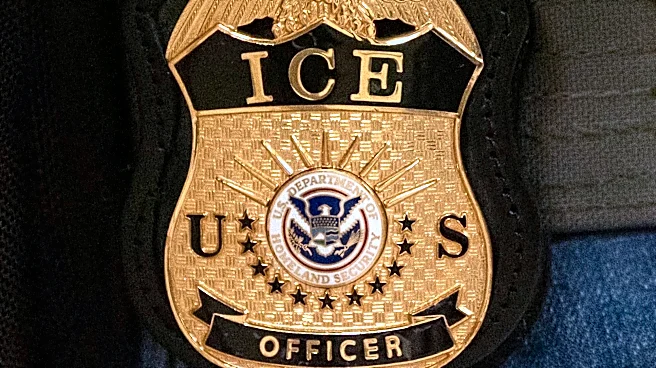
activities in Queens, New York, which has led to criticism from Meng and concerns within immigrant communities. The proposed legislation includes the Uniform Standards for Federal Law Enforcement Act, which seeks to codify certain Department of Homeland Security law enforcement policies into federal law to enhance congressional and judicial oversight of individual federal law enforcement officers. Additionally, the Safe Check-Ins for Immigrants Act would allow individuals undergoing legal immigration processes to attend required hearings or check-ins remotely under certain conditions, reducing the risk of detention during routine appointments. The third bill, the ICE Badge Visibility Act, mandates that ICE officers clearly display their badges and agency identification during enforcement actions and prohibits them from wearing masks, aiming to improve transparency and accountability during operations. Meng asserts that these measures are crucial to prevent ICE from operating without proper oversight and to address concerns about racial profiling and community fear.
Why It's Important?
These legislative proposals are significant as they directly address concerns about the conduct and oversight of a federal law enforcement agency with broad powers over immigration. The Uniform Standards for Federal Law Enforcement Act could establish a more robust legal framework for holding individual federal law enforcement officers accountable, potentially setting a precedent for other agencies. The Safe Check-Ins for Immigrants Act could alleviate significant stress and fear for immigrants navigating legal processes, potentially reducing the number of detentions during routine administrative tasks and fostering greater trust between immigrant communities and government agencies. The ICE Badge Visibility Act aims to enhance transparency during enforcement actions, which could mitigate issues of mistaken identity, reduce community apprehension, and provide a clearer basis for addressing alleged misconduct. If passed, these bills could lead to a substantial shift in how ICE operates, impacting immigrant communities, civil liberties advocates, and the broader discussion around immigration enforcement in the U.S. The increased ICE activity in New York, as reported by 'Hands Off NYC,' highlights the immediate relevance and urgency of these proposed reforms.
What's Next?
Congresswoman Meng has stated her commitment to advancing these three reform measures through Congress, indicating that she will continue to advocate for their passage into law. The legislative process will involve committee hearings, potential amendments, and votes in both the House and Senate. The outcome will depend on the level of bipartisan support these bills can garner, as well as the broader political climate surrounding immigration reform. Meanwhile, local officials in New York, including the New York State Governor and New York City Mayor, have announced funding to provide legal representation for unaccompanied minors facing immigration proceedings, demonstrating a multi-faceted approach to addressing immigration-related challenges. Meng's office is also actively assisting families affected by ICE actions, connecting them with legal resources, and collaborating with immigrant rights organizations like the New York Immigration Coalition and Make the Road New York to provide 'Know Your Rights' information to residents. The Department of Homeland Security (DHS) has previously stated that ICE operates nationwide to enforce immigration laws, targeting individuals involved in serious crimes, suggesting a potential continued focus on enforcement despite calls for reform.
Beyond the Headlines
The proposed legislation by Congresswoman Meng delves into the fundamental balance between national security and civil liberties, particularly for immigrant populations. The debate over ICE's operational methods touches upon ethical considerations regarding the treatment of individuals, regardless of their immigration status, and the potential for racial profiling. The increased enforcement activities and the resulting fear in communities, as reported in Flushing, New York, underscore the social and psychological impact of federal immigration policies on local populations. The call for greater transparency and accountability reflects a broader societal demand for oversight of law enforcement agencies to prevent abuses of power and ensure adherence to due process. The legislative efforts also highlight the ongoing tension between federal immigration mandates and local community concerns, prompting discussions about the appropriate scope and methods of immigration enforcement. The long-term implications could include a re-evaluation of federal law enforcement training, protocols, and the legal avenues available for individuals to seek redress against alleged misconduct, potentially shaping future immigration policy and community relations.