


What's Happening?
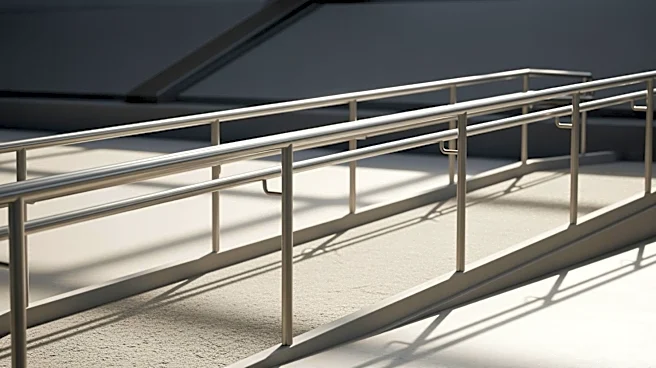
Fastenal Company has partnered with FIRST Robotics to improve accessibility at FIRST Robotics Competition events. The collaboration focuses on creating custom-engineered ramps to provide better sightlines for wheelchair users during competitions. Team
3313 Mechatronics, which includes a wheelchair user, initiated the project by designing a ramp to enhance visibility and participation. Fastenal's engineering and manufacturing teams worked with FIRST engineers to finalize and produce the ramps, ensuring they met functional and accessibility standards. A total of 50 ramps were manufactured and distributed to FIRST events, debuting at the global FIRST Championship event.
Why It's Important?
This initiative is significant as it addresses accessibility challenges in STEM-related competitions, promoting inclusivity for participants with disabilities. By enhancing access, the project supports broader participation in robotics, a field crucial for future technological advancements. The collaboration between Fastenal and FIRST Robotics highlights the importance of corporate involvement in educational and community initiatives, potentially inspiring other companies to invest in similar projects. This effort not only benefits current participants but also sets a precedent for future events, ensuring that all individuals, regardless of physical ability, can engage fully in STEM activities.
What's Next?
The ramps are now part of the standard competition kit for FIRST events, suggesting a long-term commitment to accessibility. As these ramps are used in more competitions, feedback from participants may lead to further improvements or innovations in accessibility solutions. The success of this project could encourage other organizations to adopt similar measures, potentially leading to industry-wide changes in how accessibility is approached in competitive and educational settings. Additionally, the partnership may inspire further collaborations between corporations and educational organizations to address other barriers in STEM fields.
Beyond the Headlines
The development of these ramps not only improves physical accessibility but also fosters a more inclusive culture within the robotics community. It challenges other organizations to consider the diverse needs of participants and to innovate accordingly. This project underscores the role of engineering and design in solving real-world problems, providing a practical example of how technical skills can be applied to enhance inclusivity. It also highlights the potential for community-driven solutions to influence larger systemic changes, encouraging a shift towards more equitable practices in various sectors.