







What's Happening?
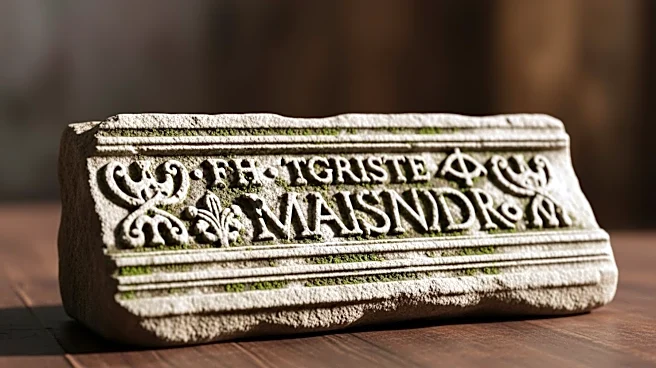
A nearly 2,000-year-old Roman gravestone, discovered in a New Orleans backyard, has been returned to Italy. The marble epitaph, dedicated to Sextus Congenius Verus, was handed over to Italian officials in a ceremony led by the FBI. The artifact was found
by Tulane University anthropologist Danielle Santoro and her husband while clearing their yard. It was identified as a missing piece from a museum in Civitavecchia, Italy. The FBI coordinated the return under the US-Italy Cultural Property Agreement, which aims to prevent the illicit trafficking of cultural artifacts.
Why It's Important?
The return of the Roman gravestone highlights the importance of international cooperation in preserving cultural heritage. The US-Italy Cultural Property Agreement plays a crucial role in protecting antiquities from illegal trade and ensuring their rightful return. This event underscores the significance of cultural diplomacy and the shared responsibility of nations to safeguard historical artifacts. The successful repatriation also strengthens trust and collaboration between the US and Italy, setting a precedent for future cultural property cases.
Beyond the Headlines
The discovery and return of the gravestone raise questions about the provenance of artifacts and the ethical responsibilities of collectors and institutions. It also highlights the role of individuals and local communities in identifying and preserving cultural heritage. The case serves as a reminder of the impact of historical events, such as World War II, on cultural collections and the ongoing efforts to recover lost artifacts. The story resonates with communities that have experienced loss and recovery, emphasizing the value of cultural identity and memory.