



What's Happening?
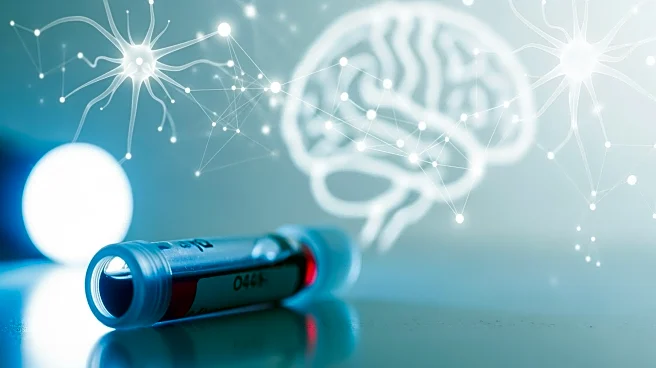
A recent study published in Nature Medicine has explored the potential of using existing blood tests to predict the onset of Alzheimer's disease symptoms. The research focused on a protein called p-tau217, a biomarker found in blood plasma, which is used to detect
amyloid plaques, key indicators of Alzheimer's. The study analyzed data from over 600 older adults involved in long-term Alzheimer's research initiatives. Researchers developed models to estimate the age at which individuals might begin experiencing symptoms based on the levels of p-tau217. This approach could help in staging the disease and managing treatments more effectively. However, experts caution that while the findings are promising, the estimates are not yet precise enough for clinical use, with a margin of error of about 3 to 4 years.
Why It's Important?
The study's findings are significant as they offer a potential method for predicting Alzheimer's disease progression, which could revolutionize how the disease is managed and treated. Early detection is crucial in Alzheimer's, as it allows for timely intervention and better management of symptoms. The ability to estimate when symptoms might appear could aid in the development of targeted therapies and improve patient outcomes. However, experts emphasize the need for caution, as the current models are not yet ready for clinical application. The research highlights the importance of continued exploration into blood biomarkers and their role in understanding Alzheimer's disease.
What's Next?
Researchers are working to refine the predictive models to improve their accuracy for individual use. The study's authors are focused on enhancing the precision of the p-tau217 blood tests to make them viable for clinical decision-making. As the models are fine-tuned, they could become a valuable tool in clinical trials and research settings, potentially leading to new treatment strategies. The ongoing research aims to integrate these blood tests with other diagnostic tools, such as brain scans and spinal fluid biomarkers, to provide a comprehensive approach to Alzheimer's diagnosis and management.
Beyond the Headlines
The study underscores the ethical and practical considerations of using predictive tests for Alzheimer's. While the potential benefits are significant, there is a risk of misdiagnosis or creating anxiety among patients if the tests are not accurate. The reliance on biomarkers without comprehensive clinical evaluation could lead to false positives. This highlights the need for a balanced approach that combines biomarker testing with traditional diagnostic methods. The research also points to a broader trend in medicine towards personalized and predictive healthcare, where early detection and intervention are key to managing chronic diseases.