





What's Happening?
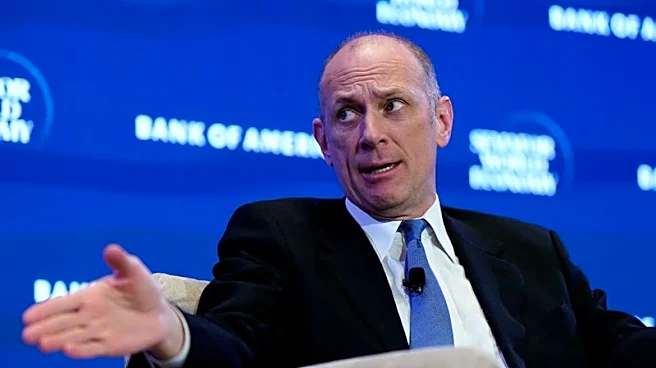
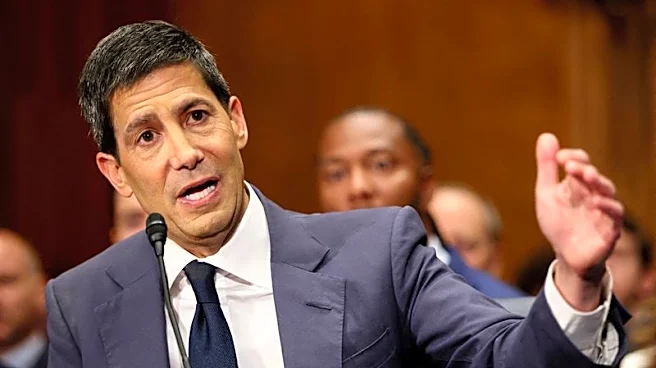
Kevin Warsh has been confirmed as the new chair of the Federal Reserve following a narrow Senate vote, marking the closest confirmation in modern history. Warsh, a former Fed governor, was confirmed with just 54 votes, the weakest support for any Fed chair since
the position began requiring Senate approval in 1977. His confirmation comes as President Trump advocates for lower interest rates, a stance Warsh will need to navigate amidst rising inflation. Warsh succeeds Jerome Powell, who will remain as a governor at the central bank. The confirmation signals potential challenges ahead for Warsh, who has been a vocal critic of U.S. monetary policy and has called for a 'regime change' at the Fed.
Why It's Important?
Warsh's confirmation is significant as it comes at a time of economic uncertainty, with inflationary pressures mounting. His leadership could influence the direction of U.S. monetary policy, impacting interest rates and economic growth. The narrow vote reflects a divided Senate, indicating potential challenges in garnering support for future policy decisions. Warsh's stance on monetary policy could lead to shifts in the Fed's approach, affecting financial markets and the broader economy. Stakeholders, including businesses and consumers, may experience changes in borrowing costs and economic conditions as a result of his policies.
What's Next?
As Warsh takes on his new role, he will need to address the challenges of managing inflation while balancing the interests of various economic stakeholders. His ability to build consensus within the Fed and with lawmakers will be crucial in implementing effective monetary policies. The economic landscape, including potential geopolitical tensions and domestic economic indicators, will influence his policy decisions. Observers will be watching closely to see how Warsh navigates these complexities and whether he can achieve the 'regime change' he has advocated for.