

What's Happening?
Andrey Rublev's iconic 'Trinity' artwork, a fragile early 15th-century piece, is reportedly in critical condition after being moved from the Tretyakov Gallery to the Trinity Lavra of St. Sergius monastery three years ago. Museum experts had previously
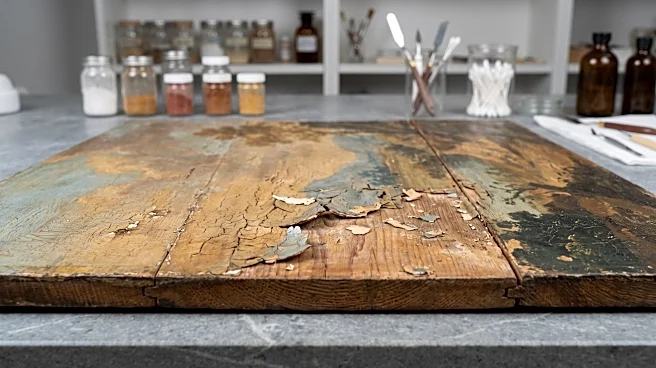
warned that the transfer could damage the icon due to the lack of controlled environmental conditions outside of a museum setting. The climate-controlled display case housing the 'Trinity' at the monastery has been malfunctioning for several months, leading to humidity levels of 80%, significantly higher than the required 50-55%. This excessive humidity has caused the icon's three wooden panels to swell, resulting in the paint layer buckling and curling. A German specialist attempted repairs, but the equipment failed again after his departure, and he cannot return due to international relations difficulties. The Moscow Patriarchate has stated that Tretyakov Gallery staff will examine the icon, and the Culture Ministry has reportedly criticized the Lavra for concealing the icon's deteriorating condition.
Why It's Important?
The reported critical condition of Andrey Rublev's 'Trinity' icon highlights significant concerns regarding the preservation of invaluable cultural heritage when political and religious considerations override expert conservation advice. The decision to move the icon, reportedly made by Vladimir Putin in response to requests from Orthodox believers, demonstrates a potential disregard for established museum protocols designed to protect ancient and fragile artworks. This situation underscores the tension between religious institutions' desire for sacred objects to be housed in their original contexts and the scientific requirements for their long-term preservation. The failure of the climate-controlled display case and the inability of a specialist to return due to 'difficulties in international relations' also reflect broader geopolitical impacts on cultural preservation efforts, potentially setting a precedent for similar challenges in other regions with shared cultural assets and strained international ties. The incident could lead to increased scrutiny of decisions involving the transfer of historical artifacts and potentially influence future policies on cultural heritage management.
What's Next?
The Moscow Patriarchate has announced that Tretyakov Gallery specialists will conduct a 'routine inspection' of the 'Trinity' icon, which has been removed from the iconostasis for this purpose. The Tretyakov Gallery's press office has confirmed that the icon is undergoing restoration and that museum staff will examine its condition. While the icon formally remains part of the Tretyakov Gallery's collection, with the Russian Orthodox Church having a 49-year free-use agreement, the museum is still responsible for its condition. It is expected that the icon will be returned to its place in the Trinity Lavra of St. Sergius 'soon,' according to the Lavra. The Culture Ministry's reported criticism of the Lavra for concealing the icon's condition suggests potential internal investigations or increased oversight regarding the icon's care. The long-term implications for the icon's stability and the future of similar cultural transfers remain uncertain.
Beyond the Headlines
The deteriorating state of the 'Trinity' icon raises profound ethical and legal questions about the ownership, stewardship, and preservation of cultural heritage, particularly when religious and state interests intersect. The incident highlights the vulnerability of ancient artifacts to environmental factors and the critical role of specialized conservation expertise. The reported damage to the Trinity Cathedral's iconostasis due to the installation of portable air conditioners for Rublev's icon further illustrates the unintended consequences of such transfers, impacting other historical works. This situation could spark a broader debate on the balance between accessibility for religious worship and the imperative of scientific preservation, potentially leading to calls for stricter international guidelines or legal frameworks to protect cultural treasures from political or religious interference. The inability to secure expert repair due to 'difficulties in international relations' also underscores how geopolitical tensions can directly impede cultural preservation efforts, making the safeguarding of shared human heritage a casualty of broader conflicts.