

What's Happening?
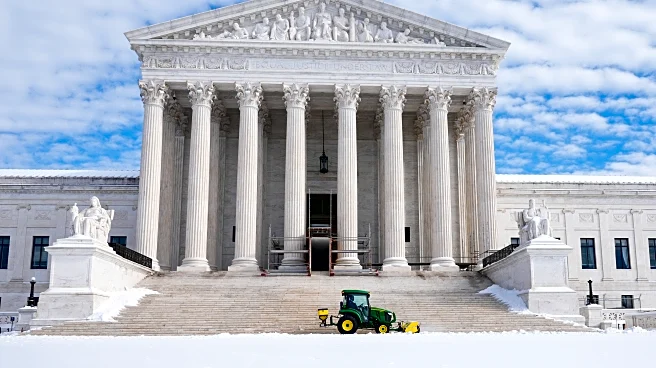
The U.S. Supreme Court is reviewing a Hawaii law that restricts gun owners from carrying firearms onto private property without the owner's explicit consent. The law, challenged by gun rights advocates, is part of a broader effort to regulate gun carrying in public
spaces. The case, Wolford v. Lopez, has drawn attention due to its implications for gun rights and property rights. The Supreme Court's conservative justices expressed skepticism about the law, questioning its alignment with historical traditions of firearms regulation.
Why It's Important?
The outcome of this case could have significant implications for gun laws across the United States, particularly in states with similar restrictions. A ruling against Hawaii's law might strengthen Second Amendment protections and limit states' ability to impose restrictions on carrying firearms in public spaces. Conversely, upholding the law could affirm states' rights to regulate firearms on private property, potentially influencing future legislation. The decision will also contribute to the ongoing national debate over balancing gun rights with public safety and property rights.
What's Next?
The Supreme Court's decision, expected later this year, will likely set a precedent for how similar laws are evaluated in the future. Depending on the ruling, states with comparable regulations may need to revise their laws. The case could also prompt further legal challenges and legislative efforts related to gun control and property rights. Stakeholders, including gun rights groups and property owners, will be closely monitoring the outcome and its potential impact on their interests.