
What's Happening?
The New England fishing industry is playing a crucial role in scientific efforts to monitor ocean changes, particularly in the Gulf of Maine, which is warming faster than 99% of the world's oceans. Nearly
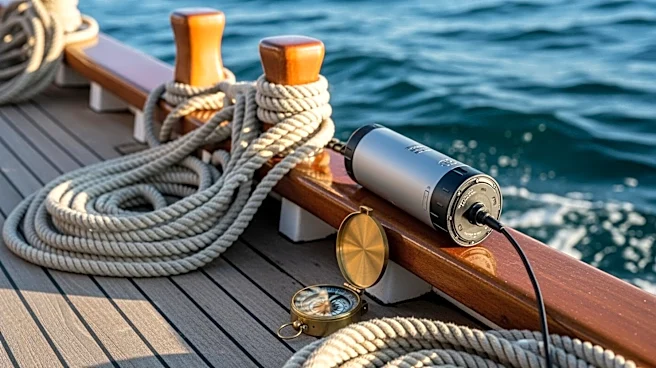
150 fishermen along the eastern seaboard have agreed to install temperature sensors on their traps or trawl nets. This initiative is part of a larger non-profit program that began in 2001 and has expanded with significant funding from the state of Massachusetts, the Nature Conservancy, and the National Oceanic and Atmospheric Administration (NOAA). The program provides fishers with a $5,000 package of sensors, software, and tablets to collect data on water temperature and oxygen levels, which is then transmitted to a remote server. This data is used to create a three-dimensional map of the ocean, aiding in marine forecasts and the management of commercial fisheries.
Why It's Important?
This collaboration between the fishing industry and scientists is significant as it provides real-time data that can influence marine forecasts and help manage fishery stocks, which are crucial for the local economy. The Gulf of Maine's rapid warming poses a threat to marine life and the fishing industry, making it essential to monitor and adapt to these changes. The data collected helps in understanding the impact of climate change on ocean currents and marine ecosystems, which is vital for developing strategies to mitigate these effects. Additionally, involving fishers in data collection empowers them with information to make informed decisions about fishing locations, potentially improving their yields and sustainability.
What's Next?
As the program continues, there is potential for further expansion and technological advancements, such as adding salinity assessments to the data collection process. This could provide even more comprehensive insights into ocean changes and their impact on climate patterns. The success of this initiative may encourage similar collaborations in other regions, fostering a broader network of citizen science efforts. Policymakers and environmental organizations may use this data to implement more effective conservation strategies and regulations to protect marine ecosystems and support the fishing industry.
Beyond the Headlines
The integration of local ecological knowledge through this program highlights the importance of stakeholder engagement in scientific research. By involving fishers directly, the program not only enhances data accuracy but also builds trust and cooperation between scientists and the fishing community. This approach aligns with the broader concept of 'citizen science,' where non-scientists contribute to scientific knowledge production. Such collaborations can lead to more sustainable fishing practices and help in marketing efforts to increase demand for climate-resilient fish species, ultimately supporting the long-term viability of the fishing industry.