
What's Happening?
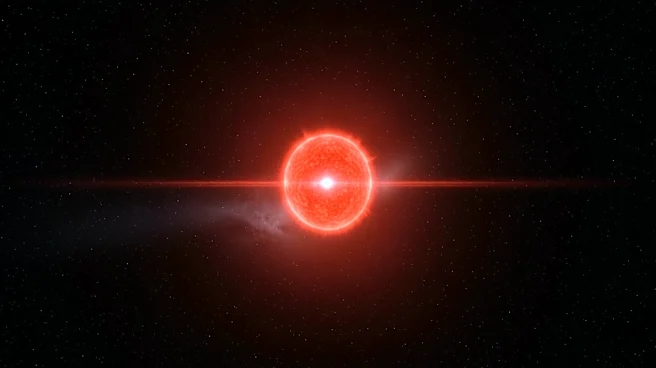
A mysterious red object, located 11.8 billion light-years away, has been detected emitting X-rays, potentially solving one of astronomy's biggest puzzles. This object, identified as 3DHST-AEGIS-12014,
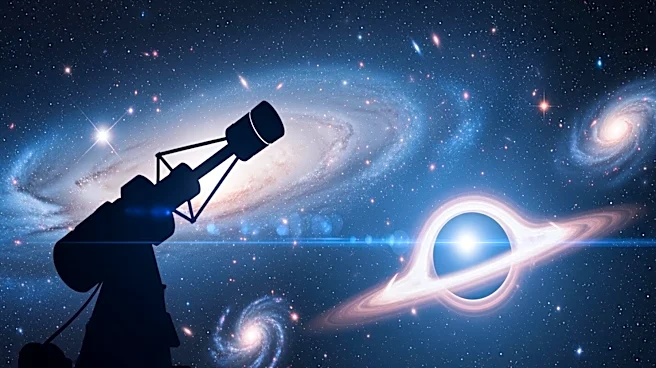
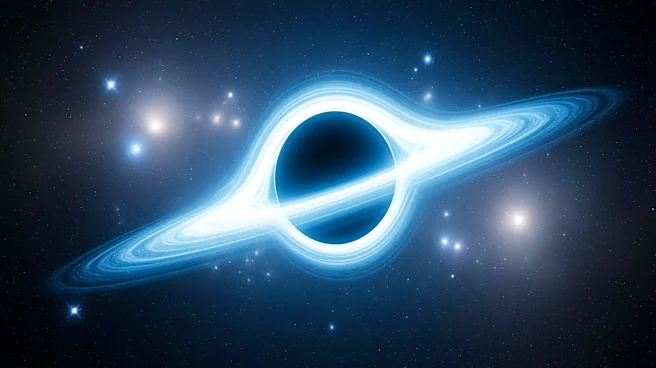
was observed by NASA's Chandra X-ray Observatory and the James Webb Space Telescope. It may represent a missing link in understanding how early supermassive black holes grow. These 'little red dots' have puzzled astronomers due to their unusual properties, which do not match typical black holes. The discovery suggests that these objects could be rapidly growing supermassive black holes, providing new insights into galaxy evolution and black hole formation.
Why It's Important?
The detection of X-rays from 3DHST-AEGIS-12014 offers a new perspective on the formation and growth of supermassive black holes in the early universe. Understanding these processes is crucial for developing accurate models of galaxy evolution and the role of black holes in shaping cosmic structures. This discovery could lead to a reevaluation of existing theories and enhance our knowledge of the universe's formative years. The findings also highlight the capabilities of modern telescopes in uncovering hidden aspects of the cosmos, emphasizing the importance of continued investment in astronomical research.
What's Next?
Future observations are expected to clarify the nature of 3DHST-AEGIS-12014 and similar objects. Researchers will likely focus on determining whether these 'little red dots' are indeed transitional phases of black hole growth or if alternative explanations, such as unusual dust types, are more plausible. Continued study of these objects could provide further evidence linking them to black hole development, potentially reshaping our understanding of the early universe. As more observatories join the search for faint interstellar objects, the potential for new discoveries in this field remains high.