



What's Happening?
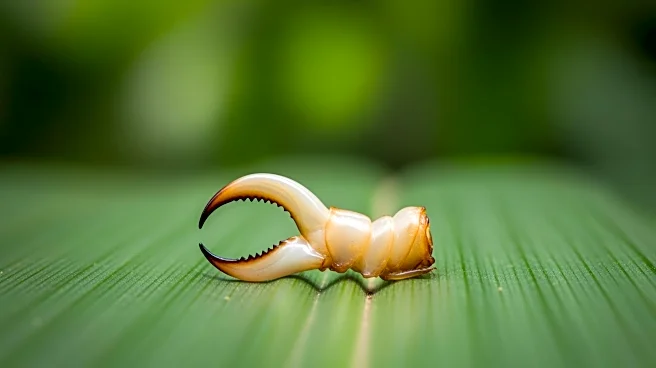
Scientists have discovered a new species of termite in the rainforest canopy of French Guiana, characterized by a unique head shape reminiscent of the fictional whale Moby Dick. The species, named Cryptotermes mobydicki, was found in a dead branch eight
meters above the forest floor. The termites possess a distinctive elongated head that conceals their mandibles, a feature not seen in other known termite species. This discovery was made at the Nouragues research station, a site known for its biodiversity. The new species adds to the 15 other Cryptotermes species documented in South America, but its unusual anatomy raises questions about its evolutionary adaptations.
Why It's Important?
The discovery of Cryptotermes mobydicki provides new insights into insect evolution and biodiversity in tropical rainforests. The unique head structure of this termite species challenges existing understanding of termite anatomy and defense mechanisms. This finding highlights the importance of canopy research in uncovering previously unknown species and contributes to the broader understanding of ecological roles played by termites in nutrient recycling. The species does not pose a threat to human structures, as it inhabits only dead wood in natural settings, emphasizing its ecological role in decomposition.
Beyond the Headlines
The unusual head shape of Cryptotermes mobydicki raises questions about its functional advantages and evolutionary history. The genetic analysis suggests a link between this species and termite populations in other parts of the Caribbean, indicating a possible historical spread across the region. This discovery underscores the potential for further findings in the largely unexplored canopy ecosystems, where unique adaptations may have evolved in isolation. The research contributes to the growing body of knowledge about the diversity and complexity of life in tropical rainforests.