







What's Happening?
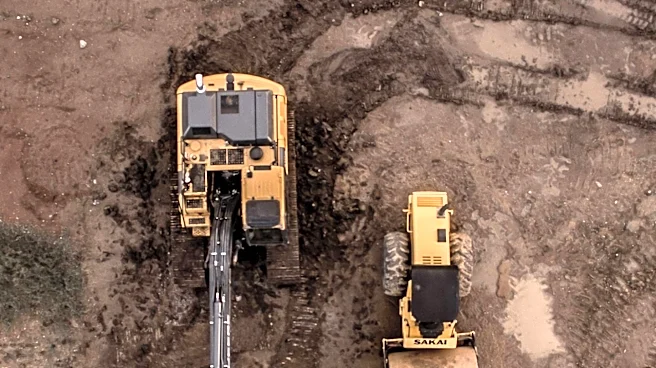
Recent satellite images, provided by US commercial satellite imaging firms Vantor and Planet Labs, show that Russia has rapidly constructed a new attack drone base from an empty field in a matter of weeks. The site is located in southwestern Russia, approximately
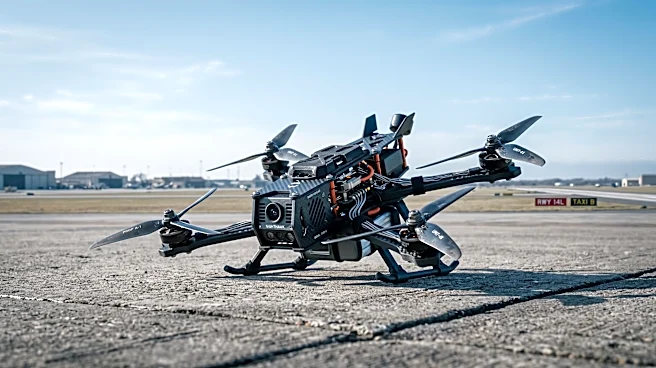
two miles from an air base in Millerovo. This new facility is one of about a dozen known launch sites for Russia's Geran drones, which are Russian versions of Iranian long-range strike drones. These drones are launched alongside ballistic and cruise missiles to create larger and more complex barrages. Spencer Faragasso, a senior fellow at the Institute for Science and International Security, noted the "very fast turnaround" for the base's advanced stage of construction since ground was broken in August. The images from October 27 show the site still under construction, with at least eight launch bays, possibly for Geran-5s, which are jet-powered attack drones.
Why It's Important?
The rapid construction of this drone base signifies Russia's increasing expertise and efficiency in establishing military infrastructure for its drone operations. This capability allows Russia to quickly adapt and expand its drone warfare capacity, posing a significant challenge to Ukraine's air defense systems. The Geran-5 drones, which are faster and more advanced, require expensive air defense missiles to intercept, further straining Ukraine's resources. The ability to build such bases quickly also means that if one facility is targeted, another can be rapidly established, ensuring continuity in drone attacks. This development suggests a strategic shift towards mass-producing and deploying these advanced drones, which could intensify the conflict and increase the cost of defense for Ukraine and its allies.
What's Next?
Experts anticipate that Russia may continue to build similar drone bases elsewhere, leveraging its newfound expertise in rapid construction. This expansion could lead to an increased frequency and scale of drone attacks, particularly with the more advanced Geran-5s. Ukraine will likely face continued pressure to develop more cost-effective and efficient countermeasures against these sophisticated drones. The international community may also need to consider strategies to counter Russia's growing drone capabilities and its ability to quickly establish new launch sites. The ongoing development of these bases indicates a long-term commitment by Russia to drone warfare as a key component of its military strategy.
Beyond the Headlines
The rapid development of drone bases highlights a broader trend in modern warfare: the increasing reliance on unmanned aerial vehicles and the agility required to deploy and sustain them. This shift has significant implications for military logistics, defense strategies, and the nature of conflict itself. The ability to quickly convert civilian land into military infrastructure demonstrates a high degree of operational flexibility and resource mobilization. Furthermore, the use of Iranian-designed drones underscores the growing international collaboration in military technology, which can complicate geopolitical dynamics and arms control efforts. This development also raises ethical questions about the proliferation of autonomous weapons systems and their impact on civilian populations.