





What's Happening?
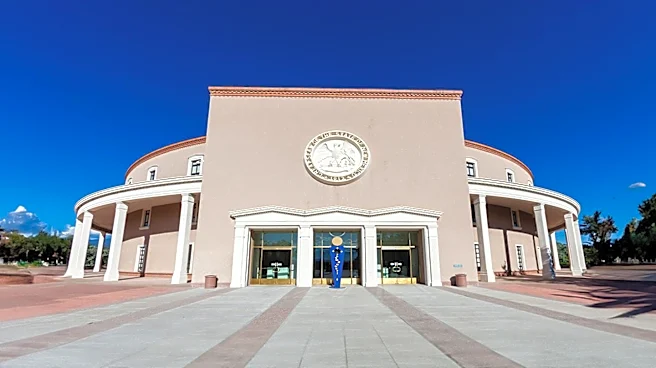
The U.S. Government Publishing Office (GPO) has designated the New Mexico Supreme Court Law Library in Santa Fe as the 2026 Federal Depository Library of the Year. This recognition highlights the library's exceptional dedication to providing free public
access to government information, its efforts in preserving its collection, and its service to communities across New Mexico. A virtual ceremony was held during the Federal Depository Library Conference in Washington, D.C., where State Law Librarian Stephanie Wilson accepted the award. GPO Director Hugh Nathanial Halpern commended the library for its vital role in connecting people with government information and its commitment to preserving both print and digital resources, ensuring access regardless of technological limitations. The New Mexico Supreme Court Law Library, established in 1851 as New Mexico’s Territorial Library, has a long history of serving the Judiciary, Government, legal community, and the public for over 175 years. It maintains crucial legal resources, including the Code of Federal Regulations, United States Code, and United States Reports, and rarely removes items from its collection to support long-term access and preservation. The library recently completed an item-level inventory of more than 11,900 items in its Federal Depository Library collection and is integrating these resources into its online catalog to enhance discoverability.
Why It's Important?
This award underscores the critical role that Federal Depository Libraries play in ensuring transparency and public access to government information, particularly in regions with limited technological access. The New Mexico Supreme Court Law Library's emphasis on preserving print government information is especially significant for communities in New Mexico, the fifth-largest state geographically, where 'technology deserts' can hinder digital access. By maintaining comprehensive print collections of legal resources like the Code of Federal Regulations and the United States Code, the library guarantees that all citizens, regardless of their internet access, can obtain essential legal and governmental information. This commitment supports informed civic engagement and equal access to justice. The GPO's recognition also highlights the dedication of library staff who provide extensive reference services in person, by phone, email, and mail, assisting patrons with legal research, court forms, and document delivery. This model of service is vital for bridging information gaps and ensuring that the public can navigate complex legal and governmental systems effectively.
What's Next?
The New Mexico Supreme Court Law Library will continue its mission of preserving, promoting, and providing access to public records and legal information. The recognition as Federal Depository Library of the Year may lead to increased visibility and potentially more resources or partnerships to further enhance its services and collections. The library's ongoing efforts to add federal depository resources to its online catalog will improve accessibility for a broader audience, complementing its robust print collection. Furthermore, the library is expected to continue offering tours and participating in legal fairs, fostering greater community engagement and awareness of available resources. This award could also serve as an example for other Federal Depository Libraries, encouraging them to adopt similar strategies for preservation and public outreach, especially in areas facing similar challenges regarding technology access. The GPO will likely continue to highlight such exemplary institutions to promote best practices within the Federal Depository Library Program.
Beyond the Headlines
The recognition of the New Mexico Supreme Court Law Library extends beyond a simple award; it highlights a fundamental aspect of democratic governance: the right to access public information. In an increasingly digital world, the library's commitment to preserving print resources addresses the digital divide, ensuring that access to critical legal and governmental documents is not contingent on internet availability or digital literacy. This approach has profound ethical implications, as it upholds the principle of equitable access for all citizens, including those in remote or underserved areas. The library's long-standing history, dating back to 1851, also underscores the enduring value of physical archives and the continuous effort required to maintain them. This commitment to long-term preservation and accessibility reinforces the idea that government information is a public trust, essential for an informed citizenry and a functioning democracy. The library's work serves as a reminder that while technology offers new avenues for information dissemination, traditional methods remain crucial for ensuring universal access and preserving historical records.