



What's Happening?
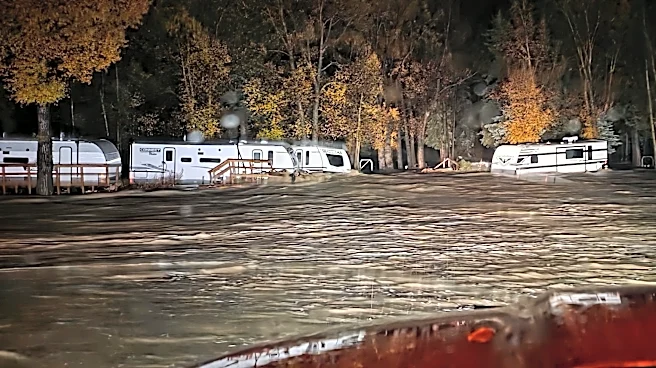
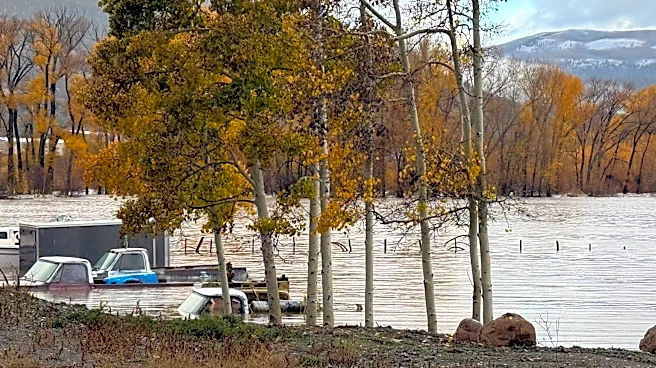
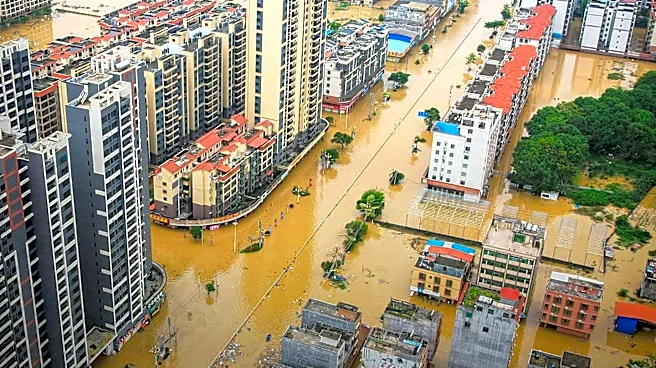
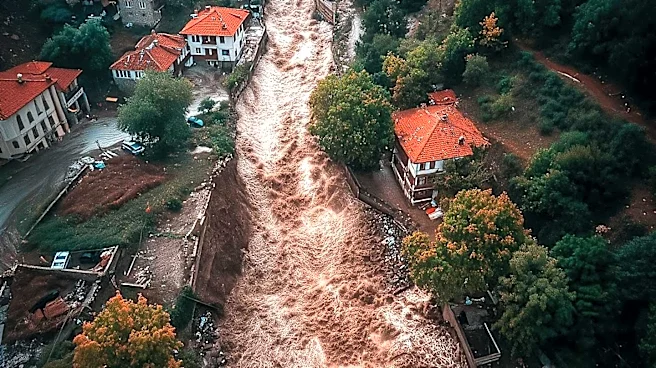
Severe flooding has impacted the arid U.S. Southwest, leading to evacuations and disruptions to Election Day plans. Pagosa Springs, Colorado, a town of approximately 2,000 residents, experienced 'potentially catastrophic' flooding as the San Juan River
crested at 16.81 feet late Sunday night, inundating downtown streets before receding. The Colorado Secretary of State's office arranged alternative voting options for evacuated or stranded residents. Evacuations were also ordered along the San Juan River in New Mexico, which was still rising and expected to crest Tuesday through Wednesday. The village of Chama, New Mexico, was evacuated and isolated by road closures, while the rising Jemez River made campgrounds and fishing sites inaccessible. Arizona reported record rainfall, with Workman Creek near Phoenix receiving 7.3 inches over two days, turning dry creek beds into torrents.
Why It's Important?
The widespread flooding in the U.S. Southwest highlights the increasing vulnerability of arid regions to extreme weather events, challenging the traditional perception of these areas. The disruption of Election Day plans underscores the direct impact of natural disasters on democratic processes and civic participation. Evacuations and road closures pose significant safety risks, economic losses, and logistical challenges for affected communities. The damage to infrastructure, homes, and natural landscapes can have long-term environmental and economic consequences. This situation emphasizes the urgent need for improved flood control measures, resilient infrastructure, and effective emergency response systems in regions not typically associated with severe flooding, particularly in the context of changing climate patterns.
What's Next?
Emergency services will continue to monitor river levels and weather forecasts, issuing further evacuation orders or advisories as needed. Efforts will focus on search and rescue, providing shelter and aid to displaced residents, and assessing the full extent of the damage. Road closures will remain in effect until conditions are safe for travel and necessary repairs are made. Election officials will ensure that all affected residents have opportunities to cast their ballots, potentially extending voting periods or providing alternative methods. Long-term recovery will involve significant investment in rebuilding infrastructure, implementing flood mitigation strategies, and developing more robust early warning systems to prepare for future extreme weather events.
Beyond the Headlines
The unusual severity of flooding in the arid Southwest points to deeper implications of climate change, where traditional weather patterns are becoming increasingly unpredictable. This event challenges existing urban planning and infrastructure development, which may not be equipped to handle such extreme precipitation. The psychological toll on residents, particularly those who have lost homes or been repeatedly displaced, can be substantial. Furthermore, the disruption of democratic processes, even temporarily, raises concerns about voter access and the integrity of elections during crises. This situation calls for a comprehensive re-evaluation of disaster preparedness, climate adaptation strategies, and public policy to protect vulnerable communities and ensure the continuity of essential services in the face of escalating environmental challenges.