



What's Happening?
India is tightening its checks on Russian oil imports, leading to an expected drop in volumes from 1.9 million barrels per day in November to 800,000 barrels per day in December. This reduction follows increased scrutiny at ports and heightened banking
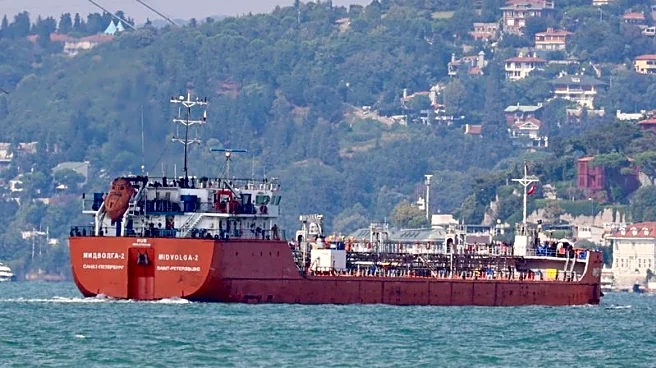
oversight to ensure compliance with Western sanctions on Russian oil. The Indian government has implemented stricter enforcement measures, including more thorough port inspections and additional documentation requirements for tankers. These actions are part of India's broader strategy to align with Western sanctions while negotiating a trade deal with the United States. Despite the overall reduction, Rosneft-backed Nayara Energy Ltd. has increased its imports due to its reliance on Russian feedstock.
Why It's Important?
India's decision to tighten checks on Russian oil imports reflects its strategic balancing act between maintaining energy security and adhering to international sanctions. The move is significant as it aligns with India's efforts to secure a broader trade agreement with the United States, which has imposed tariffs on Indian goods partly due to its Russian oil purchases. The reduction in Russian oil imports could impact India's energy supply and pricing, potentially leading to increased reliance on alternative sources. This development also highlights the geopolitical complexities of global energy trade, where countries must navigate sanctions and diplomatic relations to secure their energy needs.