




What's Happening?
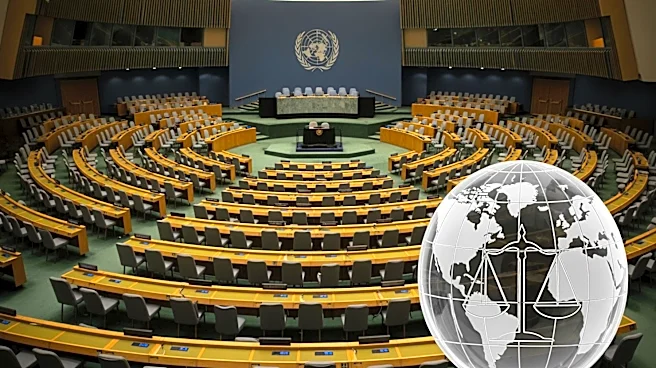
UN Watch has issued a demand for democratic countries to explain the election of nations with poor human rights records to significant positions within the United Nations. The NGO highlighted the UN Economic and Social Council's (ECOSOC) recent nomination
of Iran to the Committee for Program and Coordination, which influences policy on women's rights, disarmament, and terrorism prevention. Additionally, ECOSOC elected China, Cuba, Nicaragua, Saudi Arabia, and Sudan to the Committee on NGOs. UN Watch criticized these appointments, arguing that they undermine the ability of pro-democracy dissidents to advocate for human rights within the UN framework.
Why It's Important?
The election of countries with questionable human rights records to influential UN positions poses a challenge to the organization's credibility and effectiveness in promoting human rights globally. UN Watch's criticism underscores the tension between political interests and human rights advocacy within international institutions. The presence of such countries in key roles may hinder efforts to protect vulnerable populations and advance democratic principles. This situation calls into question the commitment of democratic nations to uphold human rights standards and maintain a rule-based international order, potentially affecting global perceptions of the UN's integrity.
What's Next?
UN Watch's demand for accountability may prompt discussions among democratic countries regarding their role in supporting human rights within the UN. The organization may continue to advocate for transparency and reform in the election process to ensure that positions are filled by nations committed to human rights. As geopolitical dynamics evolve, the pressure on democratic countries to address these concerns may increase, potentially leading to changes in how international bodies are governed. Monitoring these developments will be crucial to understanding the future of human rights advocacy within the UN.
Beyond the Headlines
The election of human rights abusers to UN positions highlights broader issues within international governance, such as the influence of political alliances and the challenges of enforcing human rights standards. This situation may prompt a reevaluation of the UN's role in global human rights advocacy and the mechanisms used to hold member states accountable. The debate over these appointments reflects ongoing tensions between national interests and global human rights commitments, raising questions about the effectiveness of international institutions in addressing complex ethical and political issues.