





What's Happening?
The Defense Security Cooperation Agency (DSCA) has issued new guidelines, DSCA 26-40, detailing procedures for the refurbishment and repair of Ukrainian-owned defense articles funded through the Ukraine Security Assistance Initiative (USAI). According
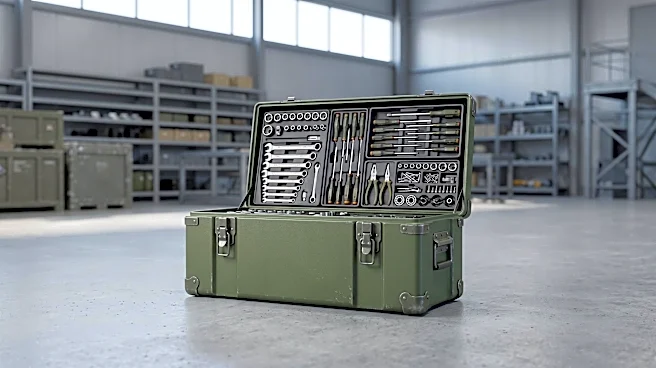
to the DSCA, these updates include adding sections AP8.USAI.2.9. and AP8.USAI.4.3. to the Security Assistance Management Manual. These sections outline the process for Ukraine to request refurbishment or repair services for its defense articles using USAI funding, including those from the USAI-Prioritized Ukraine Requirements List (USAI-PURL). The guidelines specify that the U.S. Government may need to take custody of these articles for repair. Ukraine's requests must be consistent with Figure USAI.F1, which requires endorsement from a United States European Command (USEUCOM) representative confirming the request as a valid Building Partner Capacity (BPC) requirement and that USEUCOM will handle planning and requirements definition. The policy also clarifies that defense articles undergoing repair under a BPC Letter of Offer and Acceptance (LOA) are not intended to be shipped to Ukraine, and care must be taken to prevent erroneous title transfers.
Why It's Important?
These updated DSCA guidelines are crucial for streamlining the process of maintaining and repairing Ukraine's defense capabilities, directly impacting its ongoing conflict. By formalizing the procedures for USAI-funded refurbishment, the U.S. is ensuring that critical military equipment can be kept operational, thereby sustaining Ukraine's defense efforts. This framework provides clarity on funding responsibilities and logistical arrangements, which is vital for efficient military aid delivery. The requirement for USEUCOM endorsement ensures that repair requests align with broader strategic objectives and are properly vetted. Furthermore, the explicit instruction to prevent erroneous title transfers of defense articles undergoing repair highlights the U.S. commitment to supporting Ukraine's ownership of its military assets while facilitating necessary maintenance. This policy helps to prevent potential legal or logistical complications that could arise from ambiguous ownership during the repair process, ensuring that aid remains focused on enhancing Ukraine's defensive posture.
What's Next?
The implementation of these new DSCA guidelines will likely lead to a more structured and efficient process for Ukraine to request and receive repair services for its defense articles. Ukrainian military and U.S. defense officials will need to adhere to the outlined procedures, including the proper submission of requests and USEUCOM endorsements. The guidelines also emphasize the importance of considering funding availability and fiscal law limitations, encouraging the use of procurement contracts or U.S. Government project orders to ensure timely completion of repairs. If U.S. appropriated funds cannot cover a repair, Ukraine would be responsible for associated costs like storage, disposal, or return shipment, and may submit a Letter of Request to use its national funds via Foreign Military Sales support. This suggests a potential for Ukraine to increasingly leverage its own resources for maintenance if U.S. funding is insufficient, indicating a shared responsibility in sustaining its defense capabilities.
Beyond the Headlines
Beyond the immediate operational benefits, these guidelines reflect a deeper commitment by the U.S. to the long-term sustainability of Ukraine's military. By establishing clear mechanisms for equipment repair and refurbishment, the U.S. is not just providing arms but also investing in the longevity and readiness of Ukraine's defense forces. This approach signals a strategic shift from purely providing new equipment to also ensuring the continued functionality of existing assets, which is critical in a protracted conflict. The emphasis on preventing erroneous title transfers also underscores the U.S. respect for Ukraine's sovereignty and ownership of its defense articles, even when undergoing U.S.-funded maintenance. This policy could also serve as a model for future security assistance initiatives with other allies, promoting a more comprehensive and sustainable approach to military aid that includes maintenance and logistical support, rather than just initial provision of equipment. It highlights the evolving nature of military assistance to encompass full lifecycle support for defense articles.