


What's Happening?
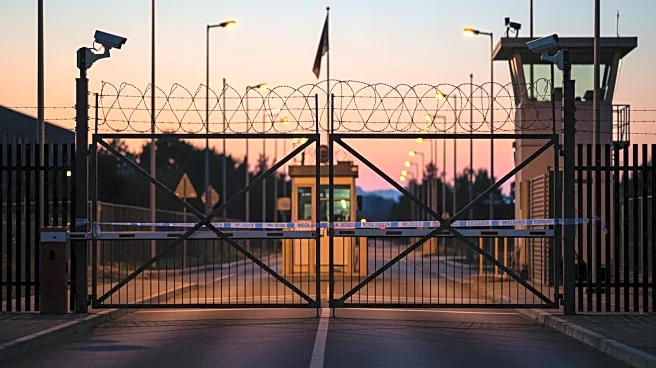
Israel has announced a limited reopening of the Rafah Crossing for pedestrian traffic, under strict Israeli monitoring. This decision aligns with President Trump's '20-point plan' and is contingent upon Hamas returning all hostages and making efforts
to locate and return the remains of fallen captives. The move has sparked significant debate within the Israeli cabinet, with several senior ministers expressing opposition. They argue that reopening the crossing could conflict with wartime objectives, particularly the destruction of Hamas, and potentially influence future sovereignty arrangements in Gaza. National Security Minister Itamar Ben-Gvir has criticized the timing, suggesting that opening the crossing could send a negative message. The decision follows the recovery of St.-Sgt.-Maj. Ran Gvili's remains, a development that has been a focal point in discussions with the United States.
Why It's Important?
The reopening of the Rafah Crossing is significant as it represents a strategic decision with potential implications for the governance of Gaza post-conflict. The move is seen by some Israeli officials as a step towards handing control of Gaza to the Palestinian Authority, which could alter the balance of power in the region. This decision also highlights the ongoing dialogue between Israel and the United States regarding security and political arrangements in Gaza. The reopening could impact Israel's security posture and its efforts to dismantle Hamas, raising concerns about the establishment of a de facto Palestinian state. The decision underscores the complex interplay between humanitarian considerations and strategic military objectives in the region.
What's Next?
The reopening of the Rafah Crossing is likely to lead to further political and strategic discussions within Israel and with international partners, particularly the United States. Israeli officials will need to navigate the delicate balance between humanitarian needs and security concerns. The decision may prompt reactions from Palestinian groups and could influence the broader geopolitical landscape in the Middle East. Monitoring the implementation of the reopening and ensuring compliance with security measures will be critical. The situation may also affect future negotiations regarding the governance and control of Gaza, with potential implications for regional stability.