





What's Happening?
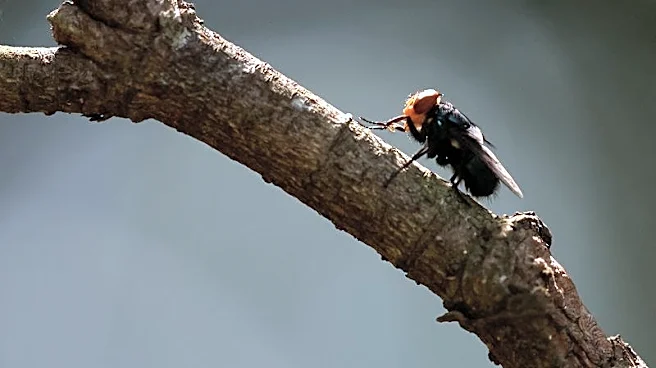
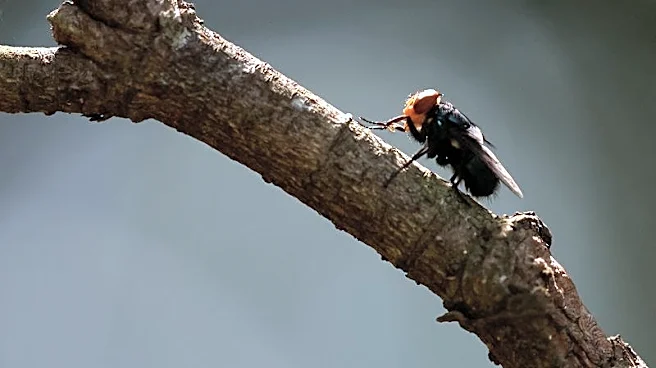
U.S. Agriculture Secretary Brooke Rollins has assured lawmakers that the USDA is capable of containing a recent case of New World screwworm detected in Texas. This flesh-eating parasite was found in a calf in the southern part of the state, marking its
first significant threat to the U.S. cattle industry in decades. The parasite, which has been advancing north through Mexico, poses a serious risk to livestock as it consumes warm-blooded animals alive. The USDA is currently producing 100 million sterile flies weekly in Panama to combat the screwworm, but needs to increase this to 400-500 million to effectively push back the threat. The situation has put ranchers and traders on high alert, as a wider infestation could further reduce the U.S. cattle herd, already at its smallest in 75 years.
Why It's Important?
The detection of screwworm in Texas is significant due to its potential economic impact on the U.S. livestock industry. Experts estimate that if the parasite spreads, it could result in up to $1.8 billion in economic losses. The U.S. cattle herd is already at a historic low, and further reductions could exacerbate supply issues, potentially leading to increased beef prices. The USDA's response is crucial in preventing a widespread infestation that could have severe consequences for the agricultural sector and related industries. The situation underscores the importance of maintaining robust biosecurity measures and readiness to address emerging threats to agriculture.
What's Next?
The USDA is working to ramp up the production of sterile flies to combat the screwworm effectively. This increase in production is essential to prevent the parasite from spreading further into Texas and potentially other states. Stakeholders, including ranchers and traders, will likely continue to monitor the situation closely, and any further detections could prompt additional measures or government interventions. The USDA's ability to contain the screwworm will be critical in determining the future stability of the U.S. cattle industry.