
What's Happening?
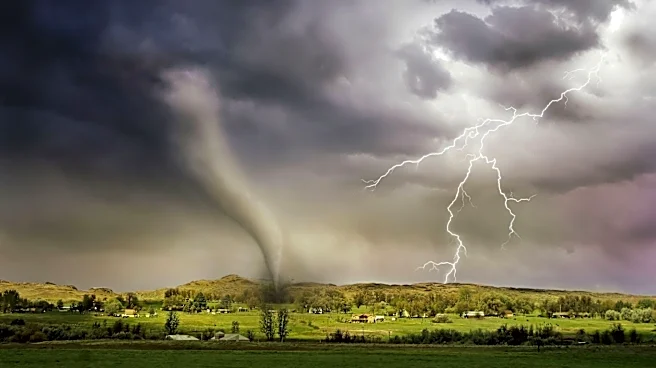
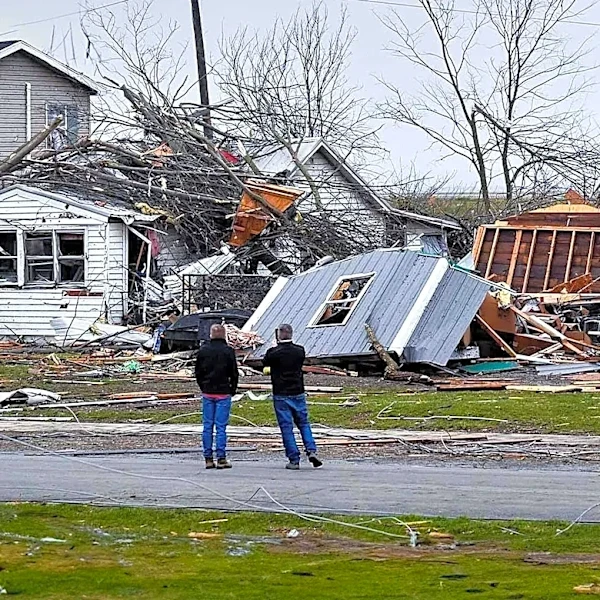
Severe storms swept through the Midwest, resulting in the deaths of three individuals and leaving over one million people without power. In Indiana, a home explosion in Portage and a fallen tree in Jennings County led to two fatalities, including a 4-year-old
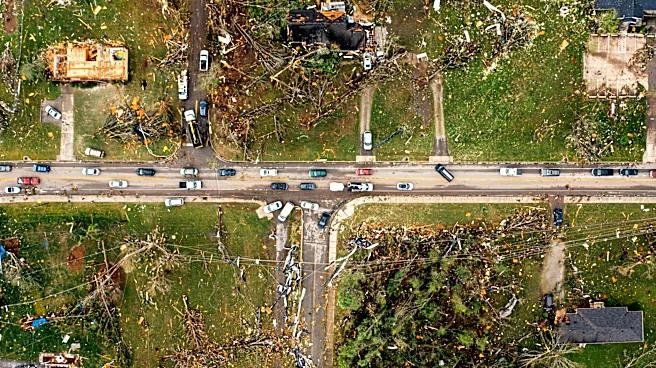
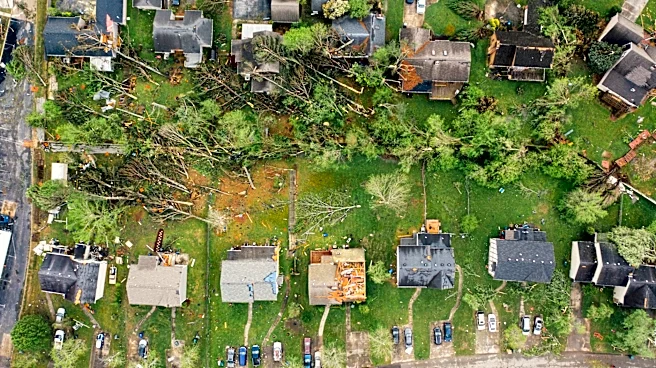
boy. Another person died in Roseville, Ohio, where emergency crews were unable to reach them due to the storm's impact. The storms, characterized by winds exceeding 80 mph, caused significant damage, including downed trees and power lines, complicating emergency response efforts. In Illinois, two tornadoes were confirmed near Chicago, causing damage consistent with EF1 tornadoes. The storms also led to a fire in Frankfort, Illinois, where a house was destroyed, suspected to be caused by lightning or downed power lines.
Why It's Important?
The severe weather has had a profound impact on the Midwest, highlighting vulnerabilities in infrastructure and emergency response capabilities. The widespread power outages affect millions, disrupting daily life and potentially leading to economic losses. The fatalities underscore the dangers posed by extreme weather events, which are becoming more frequent and severe. The situation calls for increased preparedness and resilience planning to mitigate future risks. The storms also raise concerns about climate change and its role in intensifying weather patterns, prompting discussions on environmental policy and infrastructure investment.
What's Next?
Efforts to restore power are underway, with utility companies deploying thousands of workers, including crews from other states, to address the outages. Emergency declarations have been signed in affected areas, facilitating the mobilization of resources and support. As cleanup and recovery efforts continue, there will likely be assessments of the damage and discussions on improving infrastructure resilience. The events may prompt policy discussions on climate adaptation and emergency preparedness at local and state levels.