

What's Happening?
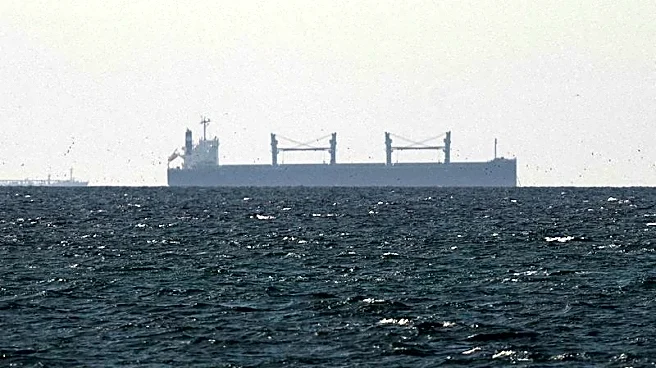
French President Emmanuel Macron and South Korean President Lee Jae Myung have agreed to collaborate on efforts to reopen the Strait of Hormuz, a critical waterway for global oil transport, amid ongoing tensions in the Middle East. The leaders met in Seoul,
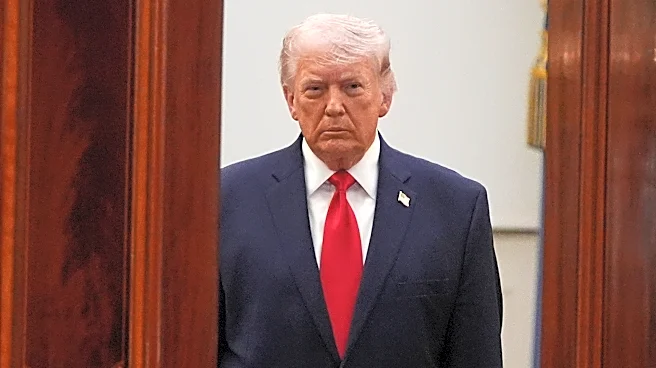
where they discussed the strategic importance of the strait and the need to stabilize the region. This meeting comes as President Trump criticized allies for not supporting U.S. and Israeli actions against Iran. Macron emphasized the role of France and South Korea in easing the crisis, while Lee highlighted their commitment to ensuring safe passage through the strait. The two countries also signed agreements to cooperate on nuclear fuel supply chains and renewable energy projects.
Why It's Important?
The Strait of Hormuz is a vital corridor for global oil shipments, with about 20% of the world's oil passing through it. The closure or disruption of this route can have significant implications for global energy markets, potentially leading to increased oil prices and economic instability. The collaboration between France and South Korea signifies a diplomatic effort to address these challenges and reduce tensions in the Middle East. This partnership could also influence international relations, as it involves key global players working together to ensure energy security and stability. The agreements on nuclear and renewable energy further highlight the strategic shift towards sustainable energy solutions.
What's Next?
While the leaders did not specify the exact measures to reopen the strait, their commitment suggests potential diplomatic initiatives or negotiations with regional stakeholders. The involvement of other countries, as suggested by President Trump, could also play a role in the resolution of the crisis. The agreements on energy cooperation indicate a long-term strategy to diversify energy sources and reduce reliance on fossil fuels, which may lead to further international collaborations in the energy sector.