





What's Happening?
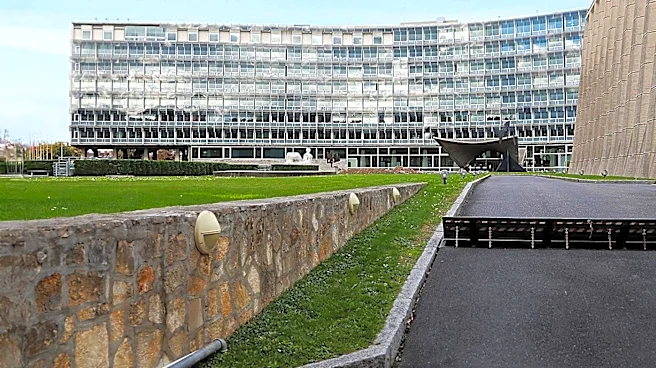
A recent report from UNESCO's Global Education Monitoring (GEM) indicates that early childhood education has expanded significantly over the past 25 years. Globally, participation for 3-year-olds is estimated at 42%, 4-year-olds at 59%, and 5-year-olds
at 80%. The enrollment rate for children one year before official primary entry age increased from 64% in 2003 to 75% in 2024. However, progress has slowed by two-thirds since 2015, partly attributed to the COVID-19 pandemic. The report highlights that 38% of countries with available data are making fast progress towards their SDG 4 benchmarks on early childhood participation. This progress varies significantly by income level: 9% in lower-middle-income countries, 47% in low-income countries, and 50% in high-income countries. A total of 55 countries have either achieved or are rapidly progressing towards their benchmarks. Notably, only a small number of low- and lower-middle-income countries, such as Burkina Faso, Burundi, Ghana, Guinea, the Lao People’s Democratic Republic, and Morocco, are on track to meet their targets.
Why It's Important?
The findings underscore a critical global challenge in ensuring equitable access to early childhood education, particularly for disadvantaged children. While overall participation has risen, the slowdown in progress since 2015, exacerbated by the pandemic, suggests that many countries, especially those with lower incomes, risk falling behind their Sustainable Development Goal 4 targets. This disparity can perpetuate cycles of inequality, as early childhood education is crucial for cognitive and social development, laying the foundation for future academic success and economic opportunities. For the U.S., while not directly addressed in this global report, the data serves as a benchmark for understanding international trends and the importance of sustained investment in early learning. The report implicitly highlights that strong political leadership, consistent investment, and policies that bolster institutions, support families, and expand affordable provision are essential to accelerate progress. Without these measures, the gap between high-income and low-income countries in educational access is likely to widen, impacting global human capital development.
What's Next?
To accelerate progress in early childhood education participation, the 2023 SDG 4 Scorecard report identified three key policy areas. These policies are crucial for countries to implement to meet their national SDG 4 benchmarks. The continued monitoring and reporting by UNESCO, such as the 2026 GEM Report, will provide further insights into the effectiveness of these policies and the evolving landscape of early childhood education. International cooperation and targeted support for low- and lower-middle-income countries will be vital to help them overcome existing barriers and achieve their educational targets. Stakeholders, including governments, international organizations, and civil society groups, are expected to use these findings to inform policy development and resource allocation, focusing on strengthening institutions, supporting families, and expanding affordable provision to ensure that disadvantaged children are not left behind.
Beyond the Headlines
The report's emphasis on the disproportionate impact on disadvantaged children reveals a deeper ethical and societal challenge. Access to quality early childhood education is not merely an educational metric but a fundamental human right and a powerful tool for social mobility and equity. The slowdown in progress post-2015, partly due to COVID-19, highlights the vulnerability of educational systems to global crises and the need for resilient, adaptable frameworks. The long-term implications of these disparities could include widening achievement gaps, reduced economic productivity in developing nations, and increased social stratification. Addressing these issues requires a holistic approach that considers not only educational policies but also broader socio-economic factors that influence access and quality. The report implicitly calls for a re-evaluation of global priorities and a renewed commitment to early childhood development as a cornerstone of sustainable development and peace.