
What's Happening?
Drivers in California are facing a potential travel ban and fines of up to $500 if they fail to equip their vehicles with tire chains or traction devices during hazardous winter conditions. The California Chain
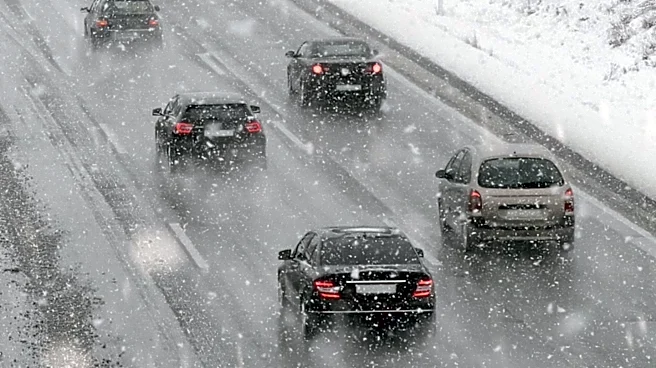
Law mandates the use of such equipment from November to April, particularly on high-elevation roads, mountain passes, and highways affected by snow and ice. The California Department of Transportation (Caltrans) is responsible for enforcing these regulations. The highway patrol will issue announcements specifying which vehicles are required to have chains during adverse weather. This enforcement comes as NOAA forecasts heavy snow for eastern and northern California, southern Oregon, and western Nevada in the coming days, with a significant storm also brewing for the Thanksgiving weekend.
Why It's Important?
This enforcement of the California Chain Law is crucial for public safety, especially with heavy snow predicted across several western states. Non-compliance can lead to dangerous driving conditions, increased accidents, and potential road closures, impacting travel and commerce. For U.S. residents and businesses, particularly those involved in transportation and logistics, these regulations mean potential delays and increased operational costs due to the need for specialized equipment. The $500 fine serves as a significant deterrent, emphasizing the state's commitment to ensuring safe passage through snowy regions. The law aims to prevent gridlock and ensure emergency services can access affected areas, thereby protecting lives and minimizing economic disruption caused by severe weather.
What's Next?
With heavy snow forecasted, drivers in affected areas of California, Oregon, and Nevada should closely monitor weather reports and official announcements from highway patrols and transportation departments. Those planning to travel through high-elevation or snowy regions must ensure their vehicles are properly equipped with tire chains or other traction devices to avoid fines and travel bans. Caltrans and local law enforcement will likely increase their presence in these areas to enforce the chain law. Travelers should anticipate potential delays, road closures, and the need for alternative routes. The Thanksgiving holiday weekend could see significant travel disruptions, making early preparation and adherence to safety regulations paramount for all drivers.
Beyond the Headlines
Beyond immediate safety concerns, the strict enforcement of tire chain laws highlights the broader challenges of managing infrastructure and public safety in regions prone to extreme weather. It underscores the economic impact of climate patterns on transportation and tourism, as businesses in mountain communities rely on accessible roads. The policy also touches on individual responsibility versus collective safety, where personal choices about vehicle preparedness have wide-ranging consequences for public services and other travelers. Furthermore, it prompts discussions about the adequacy of public information campaigns and resources to ensure all drivers, including tourists and those unfamiliar with mountain driving, are aware of and comply with these critical safety regulations.