
What's Happening?
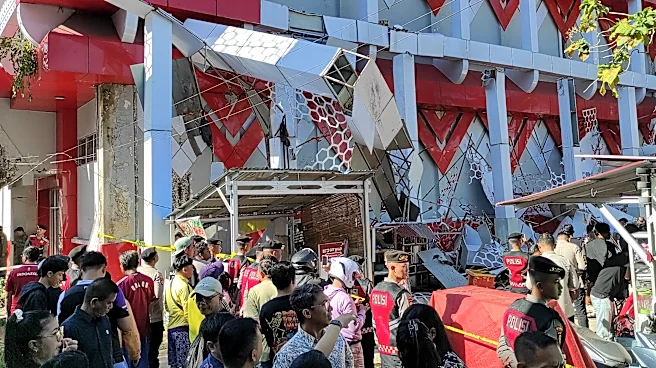
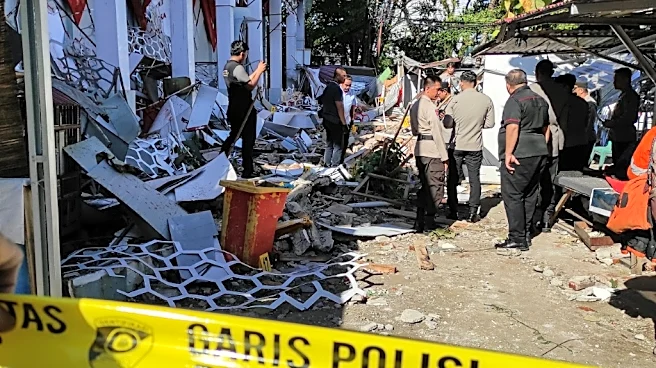
A powerful 7.4 magnitude earthquake struck the Molucca Sea near Indonesia, prompting a tsunami warning for parts of the region. The earthquake occurred at a shallow depth and was centered west-northwest of Ternate, an area along the seismically active
Pacific 'Ring of Fire.' The Pacific Tsunami Warning Center indicated that hazardous tsunami waves were possible along coastlines within about 620 miles of the epicenter, affecting parts of Indonesia, the Philippines, and Malaysia. Authorities urged coastal residents to monitor official alerts as damage assessments continued. The nearest major city to the epicenter is Ternate, with a population of over 200,000. The earthquake's impact was felt in several population centers in eastern Indonesia, with strong shaking reported.
Why It's Important?
The earthquake highlights the vulnerability of regions along the Pacific 'Ring of Fire,' where tectonic activity is frequent. Such seismic events can have significant implications for local communities, particularly in terms of infrastructure damage and potential loss of life. The tsunami warning underscores the need for effective disaster preparedness and response strategies in these areas. The economic impact could be substantial, affecting local industries and livelihoods, especially in coastal regions dependent on fishing and tourism. The event also serves as a reminder of the ongoing need for international cooperation in monitoring and responding to natural disasters.
What's Next?
Authorities will continue to assess the damage and monitor for aftershocks, which are common following major earthquakes. Coastal communities will remain on alert until the tsunami threat is fully evaluated and deemed safe. The incident may prompt reviews of current disaster preparedness plans and infrastructure resilience in the affected regions. International aid and support may be mobilized if the situation escalates, and further geological assessments will be conducted to understand the earthquake's impact better.