




What's Happening?
New York City Public Schools has announced a comprehensive policy that includes a one-year ban on student-facing generative AI for students through eighth grade and new age-based screen time guidelines. This decision, impacting nearly 600,000 public school
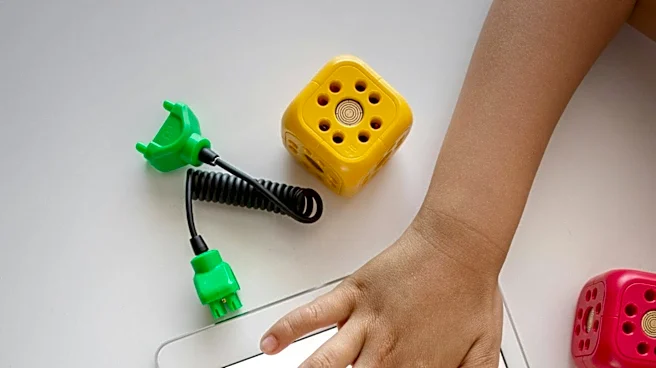
students, prohibits all software where students directly interact with generative AI, including companion chatbots across all grades. For screen time, students in second grade and below will have no one-to-one screen time. Students in grades three to five will have a recommended cap of 30 minutes per day, while grades six to eight will have a recommended cap of 45 minutes per day. Exceptions are made for assistive technology for students with individualized education plans, disabilities, or English Language Learners. High school students will be introduced to limited AI pilots and will receive twice-yearly AI literacy classes focusing on bias, risks, ethical considerations, and AI's impact on careers.
Why It's Important?
This policy marks one of the most expansive student-facing AI and screen time regulations in the U.S., reflecting a growing national concern over technology use in schools. The move by the nation's largest school district could set a precedent for other districts grappling with similar issues. For education technology companies, these restrictions signal a market that will become increasingly selective, demanding products with stronger teacher controls, age-appropriate safeguards, rigorous privacy, and evidence of genuine learning outcomes. The debate highlights a fundamental tension between promoting technological literacy and mitigating potential negative impacts on student development and well-being. The policy also underscores the need for a nuanced approach to technology in education, moving beyond simple engagement metrics to focus on actual learning and skill development.
What's Next?
The one-year ban on generative AI for younger students will be in effect for the upcoming school year, allowing the district to evaluate its impact and refine future policies. High school students will begin participating in limited AI pilots and AI literacy classes, which will inform broader implementation strategies. Education technology companies will likely face increased pressure to demonstrate the educational efficacy and safety of their products, particularly for younger age groups. Other school districts across the country will be closely observing New York City's experience, potentially leading to similar policies or a more widespread re-evaluation of technology use in K-12 education. The Software & Information Industry Association (SIIA) has criticized the 'overly restrictive' nature of the screen time limits, suggesting ongoing dialogue and potential adjustments as the policy is implemented.
Beyond the Headlines
This policy delves into deeper societal questions about the role of technology in child development and education. It challenges the notion that student engagement with technology automatically equates to learning, as highlighted by the American Psychological Association's report. The emphasis on human relationships and critical thinking skills over passive consumption of digital content suggests a shift towards a more holistic view of education. The policy also touches on the ethical responsibilities of tech companies in developing products for children, pushing for greater accountability and transparency regarding learning outcomes and safety. This move could foster a broader cultural conversation about 'screen-free spaces' and 'digital sabbaths' in children's lives, extending beyond the classroom into family and community settings, and potentially influencing parental approaches to screen time management.