




What's Happening?
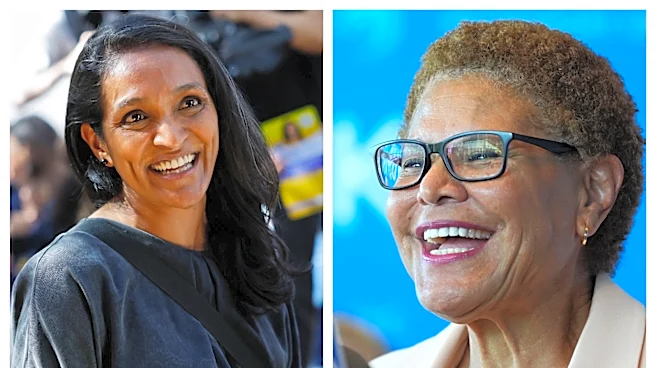
Los Angeles mayoral candidate Nithya Raman has reiterated her position that the legality of the proposed Paramount Skydance-Warner Bros. Discovery (WBD) merger should be determined in court. Raman expressed strong support for California Attorney General
Rob Bonta's antitrust lawsuit, which seeks to block the $111 billion deal. She cited a new county report estimating that the merger could lead to the loss of 4,500 film and television jobs, over 10,000 region-wide jobs, and billions of dollars in economic activity for Los Angeles. Raman characterized Paramount's alleged threat to leave California if the lawsuit is not dropped as an attempt to 'strong-arm' the state. Her statement contrasts with that of sitting L.A. Mayor Karen Bass, who called for a hasty settlement to alleviate industry uncertainty.
Why It's Important?
Nithya Raman's stance is important as it represents a firm commitment to judicial oversight in major corporate mergers, particularly when significant public interest concerns, such as job losses and market concentration, are at stake. Her support for the antitrust lawsuit underscores the belief that the legal system is the appropriate venue to address complex questions of market competition and potential monopolistic practices. This position highlights a different approach to economic development and corporate regulation compared to those advocating for a quick settlement. It also brings to the forefront the debate over whether the immediate economic anxieties of a region should override the long-term implications of unchecked corporate consolidation. The potential for job losses in the entertainment industry, a cornerstone of L.A.'s economy, makes this a critical issue for local political leaders.
What's Next?
Raman's continued support for the antitrust lawsuit means that if she were to be elected mayor, her administration would likely maintain pressure on the legal process to run its course. The federal trial for the antitrust lawsuit is scheduled for March 2027. While Mayor Karen Bass and several industry unions have called for a settlement to reduce uncertainty, Raman's position suggests that a court-mandated resolution, potentially involving significant structural changes or even blocking the merger, is preferable to a negotiated settlement that might not fully address the antitrust concerns. The ongoing mayoral race in Los Angeles could therefore influence the political climate surrounding the merger, with different candidates offering distinct approaches to how the city should engage with the issue. The ultimate decision, however, rests with the courts and the parties involved in the lawsuit.
Beyond the Headlines
Beyond the immediate political and legal ramifications, Raman's position touches on deeper ethical and governance issues. Her assertion that 'serious questions about this merger’s legality should be decided in court, not through corporate threats,' speaks to the principle of the rule of law and the integrity of the judicial process against corporate influence. This perspective challenges the notion that economic expediency should always take precedence over legal and regulatory scrutiny. It also highlights the power dynamics between large corporations and state governments, particularly when companies leverage their economic footprint to influence policy and legal outcomes. The debate between a quick settlement and a full legal review reflects a fundamental tension in modern governance: how to balance economic stability and corporate interests with the broader public good and the enforcement of antitrust laws.