



What's Happening?
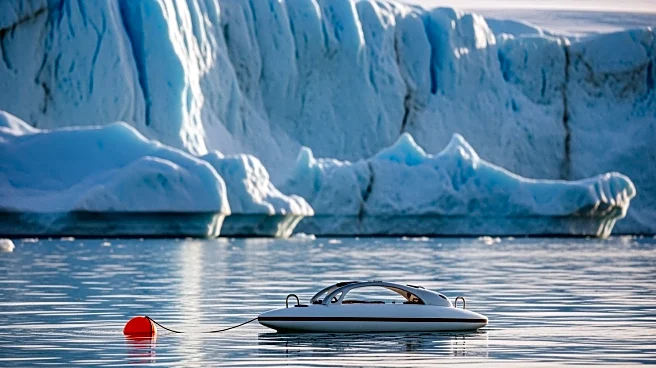
An Argo ocean float, initially deployed to study the Totten Glacier in East Antarctica, drifted unexpectedly and provided new data on the Denman Glacier. The float, equipped with temperature and salinity sensors, spent nine months beneath the Denman and Shackleton
ice shelves, collecting crucial data on ocean conditions. The findings indicate that warm water is reaching the base of the Denman Glacier, posing a risk of increased melting. This data is vital for understanding the potential contribution of East Antarctica to global sea-level rise, as the Denman and Totten glaciers together hold ice equivalent to five meters of sea-level rise.
Why It's Important?
The data collected by the Argo float is significant as it provides new insights into the stability of the Denman Glacier, which is crucial for predicting future sea-level rise. The vulnerability of East Antarctica's ice shelves to warm ocean water highlights the urgent need for comprehensive monitoring to assess the impacts of climate change. Understanding these dynamics is essential for developing accurate models of sea-level rise, which have implications for coastal communities and global climate policy. The findings underscore the importance of continued investment in oceanographic research to inform climate adaptation strategies.
What's Next?
The unexpected success of the Argo float in collecting data from previously unmeasured areas suggests the need for a broader deployment of such instruments across the Antarctic continental shelf. Expanding the network of ocean floats could significantly enhance our understanding of how ice shelves respond to oceanic changes, providing greater certainty in sea-level rise projections. This information is critical for policymakers and scientists working to mitigate the impacts of climate change. Future research efforts will likely focus on deploying more floats and integrating their data into global climate models to improve predictions.