







What's Happening?
Elsight, an Israeli defense technology company, has signed a Basic Ordering Agreement (BOA) with the U.S. Army. This agreement streamlines the procurement process for U.S. Army units to acquire Elsight’s Halo connectivity platform, which provides secure
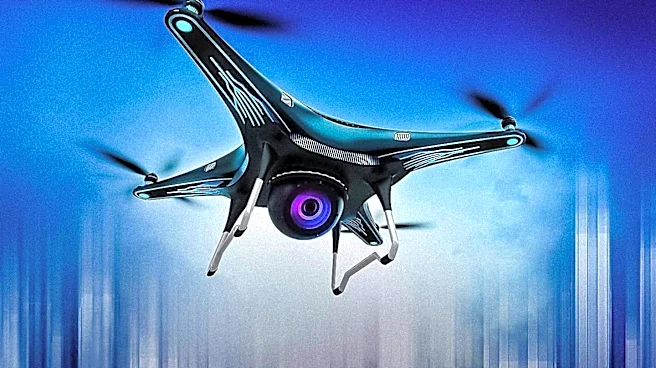
communication for unmanned aerial, ground, and maritime systems. The BOA does not guarantee future sales but establishes pre-negotiated terms that accelerate subsequent orders. This development follows the inclusion of Elsight’s Halo platform on the Pentagon-linked Blue UAS list earlier this year, a catalog of approved unmanned systems vetted for cybersecurity, supply-chain assurance, and data integrity. Elsight's technology is designed to maintain resilient communications for unmanned systems operating beyond visual line of sight, even in environments with jamming, electronic warfare, or disrupted communications. The Halo system integrates multiple communication links, including cellular, satellite, and radio-frequency connections, allowing it to switch between them for continuous data flow. The company reports over 500,000 operational hours across more than 100 customers, with deployments in high-intensity combat zones.
Why It's Important?
This agreement significantly enhances the U.S. Army's access to advanced, secure communication technology for its growing fleet of unmanned systems. The ability to maintain reliable connectivity in contested environments is crucial for modern military operations, particularly as unmanned warfare becomes more prevalent. By simplifying the procurement process, the BOA enables faster deployment of Elsight's Halo platform, potentially giving U.S. forces a critical advantage in intelligence, surveillance, reconnaissance, and other autonomous missions. The inclusion on the Blue UAS list and the BOA underscore the U.S. military's commitment to integrating vetted and secure foreign technology into its defense infrastructure. This move also reflects a broader trend of emphasizing localized and resilient defense supply chains, as Elsight is expanding its manufacturing capacity in the U.S. and Germany. The adoption of such technology can improve operational efficiency, reduce risks to personnel, and enhance the overall effectiveness of U.S. military capabilities.
What's Next?
The Basic Ordering Agreement will allow U.S. Army units to place orders for Elsight’s Halo platform more quickly and efficiently. While not a firm purchase order, it sets the stage for potential production-scale procurement as several programs involving NATO-aligned defense forces and U.S. government agencies move from pilot and evaluation stages. Elsight is also expanding its manufacturing capabilities in the United States and Germany, indicating a strategic move to meet anticipated demand and align with the emphasis on localized defense supply chains. The company's continued participation in initiatives like Project G.I. with the Pentagon’s Defense Innovation Unit suggests ongoing collaboration and integration into U.S. military autonomous systems. Future developments will likely involve further integration of Halo into various unmanned platforms and potential expansion of its use across different branches of the U.S. military and allied forces.
Beyond the Headlines
The U.S. Army's adoption of Elsight's technology highlights the increasing reliance on advanced drone capabilities and the critical need for robust, secure communication in modern warfare. This partnership also reflects the U.S. military's willingness to leverage innovative solutions from international allies, particularly in specialized technological domains. The emphasis on 'Blue UAS' vetting signifies a strategic effort to mitigate supply chain risks and ensure cybersecurity in defense systems, a growing concern given geopolitical tensions. Furthermore, the ability of the Halo platform to operate in communication-denied environments points to a future where autonomous systems will play a more significant role in high-stakes, contested operations. This could lead to a paradigm shift in military tactics and strategies, with a greater focus on resilient, interconnected unmanned assets capable of operating independently or in conjunction with human forces.