





What's Happening?
The Trump administration has provided a $99.6 million loan to Africell, a U.S.-owned cellphone network operator in Africa. This loan, issued by the U.S. government's Export-Import Bank, aims to bolster American technological presence on the continent.
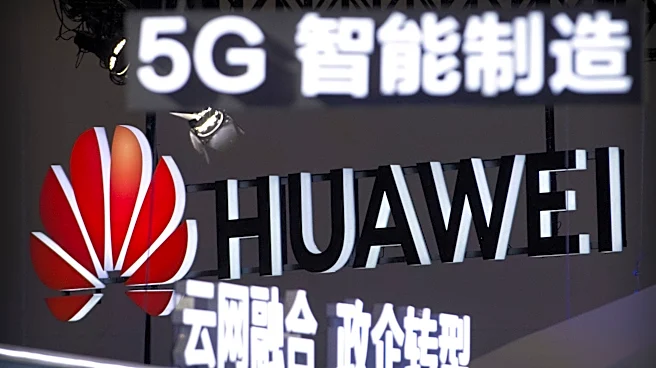
Africell, the sole U.S.-owned cell network operator in Africa, stated that the funding will support investments in American and European technology for its operations in Angola, and it also operates in Congo, Sierra Leone, and Gambia. This move comes as the Trump administration continues to address national security concerns regarding Huawei, a Chinese telecommunications giant that supplies over half of Africa's 4G and 5G network infrastructure. The U.S. has actively lobbied allies against using Huawei's products and has pursued legal actions, including a criminal racketeering trial, accusing the company of theft of technology and trade secrets.
Why It's Important?
This financial backing signifies a strategic effort by the U.S. to counter China's growing technological and economic influence in Africa. Huawei's dominance in Africa's telecommunications infrastructure has been a point of contention for the U.S., which views it as a national security risk. By supporting Africell, the Trump administration aims to create an alternative and promote American technology leadership abroad, potentially fostering U.S.-based employment in the telecommunications sector. The broader implications extend to geopolitical competition, as Africa is a crucial arena for global powers seeking to expand their economic and strategic footprints. This initiative also highlights the ongoing trade and technology disputes between the U.S. and China, with both nations vying for technological supremacy and market share in emerging economies.
What's Next?
The loan is expected to enable Africell to expand its operations and invest in American and European technology, potentially increasing its market share in Angola and other African countries where it operates. This could lead to increased competition for Huawei and other telecommunications providers in the region. The U.S. administration is likely to continue its efforts to counter Chinese influence in Africa, not only in telecommunications but also in other sectors such as critical minerals and rare earth elements. The ongoing criminal racketeering trial against Huawei in New York will also be a significant development, with its outcome potentially impacting Huawei's global operations and the broader U.S.-China technology rivalry. Future U.S. administrations may continue or adjust this strategy depending on evolving geopolitical dynamics and national security priorities.
Beyond the Headlines
Beyond the immediate economic and geopolitical implications, this initiative touches upon the broader debate about technological sovereignty and data security. As telecommunications networks become increasingly vital for national infrastructure and personal data, the origin and security of the underlying technology are paramount. The U.S. government's concerns about Huawei stem from fears of potential espionage and data vulnerabilities, which could have far-reaching consequences for national security and individual privacy. This move also underscores the importance of fostering diverse and secure supply chains for critical technologies, reducing reliance on single dominant players, especially those from rival nations. The long-term success of such initiatives will depend on their ability to provide competitive and secure alternatives that gain the trust of African nations.