
What's Happening?
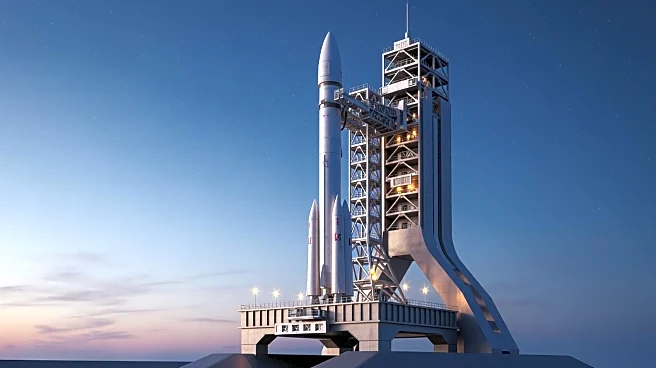
NASA's Artemis II Space Launch System (SLS) rocket, along with the Orion spacecraft, has reached Launch Pad 39B at the Kennedy Space Center in Florida. This milestone is part of the preparations for the first
crewed Artemis mission, which aims to send astronauts on a 10-day journey around the Moon. The rocket's journey to the pad was completed at a slow pace, allowing for careful handling and positioning. The next step involves a 'wet dress rehearsal,' where the rocket will be fueled and undergo a full countdown simulation. This test is scheduled for no later than February 2 and is crucial for verifying the readiness of the rocket and its systems.
Why It's Important?
The Artemis II mission represents a significant advancement in NASA's efforts to return humans to the Moon and eventually send astronauts to Mars. It is a critical test of the SLS and Orion systems, which are central to NASA's future deep space exploration plans. The mission also highlights international collaboration, with Canadian astronaut Jeremy Hansen joining the crew. Success in this mission could enhance NASA's reputation and influence future funding and partnerships. It also serves as a demonstration of technological and engineering capabilities, potentially inspiring a new generation of scientists and engineers.
What's Next?
NASA will conduct the wet dress rehearsal to ensure all systems are operational and ready for launch. If issues are detected, such as leaks or software glitches, the rocket may need to be returned to the Vehicle Assembly Building for repairs. NASA has planned additional launch windows in March and April, providing contingency options if the February launch is delayed. The mission's progress will be closely monitored by international partners and could impact future collaborative efforts in space exploration.