
What's Happening?
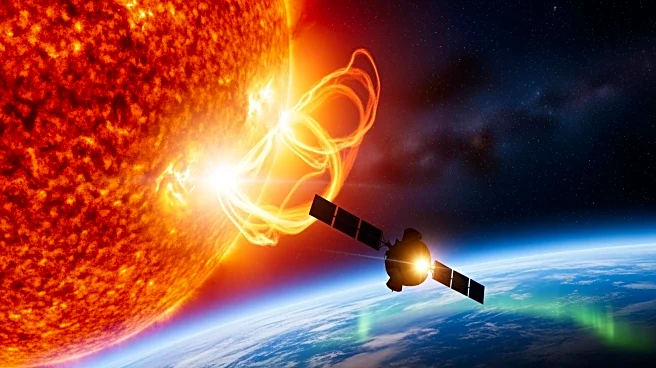
On January 19, 2026, Earth was hit by an S4-level radiation storm, the most powerful since the 'Halloween storms' of October 2003. This event was reported by Space.com, based on data from the NOAA Space Weather
Prediction Center. Radiation storms occur when a magnetic eruption on the Sun accelerates charged particles, mainly protons, to near-light speeds. These particles reach Earth in minutes, impacting space-based technology. The current storm reached S4 on the NOAA scale, which ranges from S1 (minor) to S5 (extreme). While the storm posed no threat to people on the ground due to Earth's protective atmosphere and magnetic field, it increased radiation exposure for astronauts and polar airline crews. Satellites experienced disruptions, including temporary telemetry losses, due to the intense proton flux.
Why It's Important?
The S4-level radiation storm underscores the vulnerability of space technology to solar activity. Satellites, crucial for communication, navigation, and weather forecasting, can malfunction during such events, leading to data loss and operational disruptions. Increased radiation exposure also poses risks to astronauts and airline crews flying over polar regions. This event highlights the importance of monitoring space weather to mitigate potential impacts on technology and human health. The storm's occurrence during an active solar cycle suggests a need for enhanced preparedness and resilience in space operations.
What's Next?
Future steps involve improving space weather forecasting and developing technology to withstand solar radiation. Agencies like NOAA and NASA may increase monitoring efforts to provide timely warnings of solar activity. Satellite operators might invest in radiation-hardened components to reduce vulnerability. The aviation industry could adjust flight paths to minimize radiation exposure for crews. As solar activity continues, ongoing research and international collaboration will be crucial in managing the risks associated with radiation storms.
Beyond the Headlines
The event raises questions about the long-term sustainability of space operations amid increasing solar activity. It also highlights the need for international cooperation in space weather research and response strategies. Ethical considerations include ensuring the safety of astronauts and airline crews, as well as protecting critical infrastructure from solar-induced disruptions. The storm serves as a reminder of the interconnectedness of space and terrestrial systems and the importance of investing in resilient technologies.