







What's Happening?
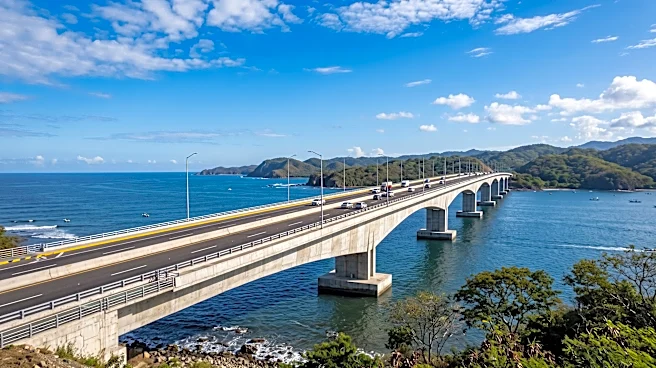
President Claudia Sheinbaum officially opened the Amado Nervo Bridge, a significant infrastructure project linking the states of Nayarit and Jalisco. The inauguration, conducted via a remote link from Palacio Nacional to Bahía de Banderas, marks the completion
of a bridge designed to improve connectivity along the Pacific coast, a region experiencing substantial tourism growth. The project, which was a commitment made by the government upon taking office, is expected to reduce travel times by up to 40 minutes for 479,000 inhabitants. The Secretary of Infrastructure, Communications and Transport, Jesús Antonio Esteva Medina, detailed that the bridge involved an investment of 963 million pesos, features three lanes in each direction, and includes a bike path on both sides. Its construction incorporated hyperstaticity and seismic resistance criteria, and it was completed four months ahead of schedule, creating 2,790 jobs. Governors of both Nayarit and Jalisco highlighted the bridge's importance for economic development, as well as strengthening regional ties in health, education, and labor.
Why It's Important?
The inauguration of the Amado Nervo Bridge is crucial for regional development, particularly in the Pacific coast area known for its growing tourism industry. By significantly cutting travel times, the bridge is expected to boost economic activity, facilitate trade, and enhance the daily lives of nearly half a million residents. Improved infrastructure often leads to increased investment and job creation, which can have a ripple effect on local economies. For the tourism sector, better connectivity means easier access for visitors, potentially leading to higher tourist numbers and revenue. Furthermore, the bridge's robust design, incorporating seismic resistance, underscores a commitment to resilient infrastructure in a geologically active region, ensuring long-term safety and functionality. The collaboration between federal and state governments on such a large-scale project also signals effective governance and a focus on national development priorities.
What's Next?
Following the inauguration, the immediate next steps will involve monitoring the bridge's impact on traffic flow, regional commerce, and local communities. The anticipated reduction in travel times and increased accessibility will likely lead to further development in the connected regions of Nayarit and Jalisco. Local authorities and businesses may leverage the improved infrastructure to attract more investment, particularly in tourism and related services. The successful early completion of this project could also set a precedent for future infrastructure initiatives, potentially encouraging more efficient execution of public works. The focus will now shift to how the bridge integrates into the broader transportation network and its long-term contribution to the economic and social fabric of the Pacific coast.
Beyond the Headlines
Beyond its immediate benefits, the Amado Nervo Bridge symbolizes a broader governmental strategy to enhance national connectivity and stimulate regional economies through infrastructure development. Such projects often serve as catalysts for urban and rural planning, influencing population distribution, land use, and the growth of ancillary services. The emphasis on a bike path also reflects a growing awareness of sustainable transportation and public health, promoting alternative modes of transit. Ethically, the project's timely completion and job creation aspects highlight the potential for large-scale public works to deliver tangible benefits to citizens and contribute to national employment goals. The bridge's role in fostering inter-state cooperation also underscores the importance of collaborative governance in achieving significant developmental milestones.