




What's Happening?
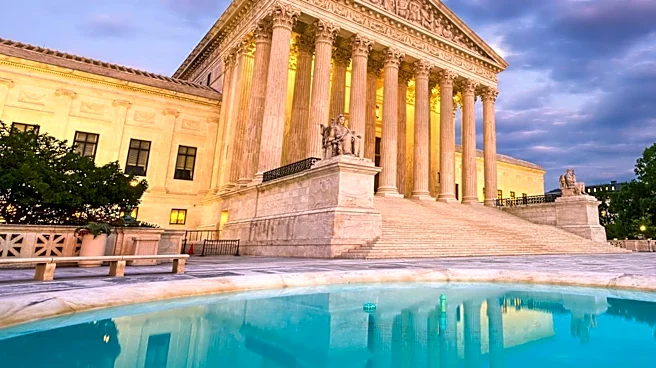
The United States Supreme Court's traditional summer recess, which halts public meetings and decisions on merits cases from July to September, is under scrutiny. This practice, established by the early 20th century, results in a backlog of cert petitions
that are only considered at the 'long conference' in late September. Critics argue that this break is an anomaly compared to inferior federal courts, which operate year-round. The suggestion is that the Supreme Court should adopt a more continuous schedule to prevent delays in justice and improve the quality of opinions by avoiding rushed decisions before the summer break.
Why It's Important?
The Supreme Court's summer recess has significant implications for the U.S. judicial system. Delays in hearing cases can lead to justice being postponed, affecting individuals and entities awaiting decisions. The current schedule may also impact the quality of rulings, as justices rush to conclude cases before the break. Reforming this practice could enhance the court's efficiency and public perception, especially as confidence in the judiciary is reportedly declining. Continuous operation could ensure timely justice and potentially improve the court's output by allowing more deliberation time.
What's Next?
Proposals suggest that the Supreme Court could gradually implement changes by holding virtual meetings during the summer months, as was done during the pandemic. This would allow the court to address urgent cases and reduce the backlog of petitions. Additionally, Congress could mandate year-round operations, requiring at least one public sitting for oral arguments each month. Such reforms could signal a commitment to improving judicial processes and addressing public concerns about the court's efficiency.