





What's Happening?
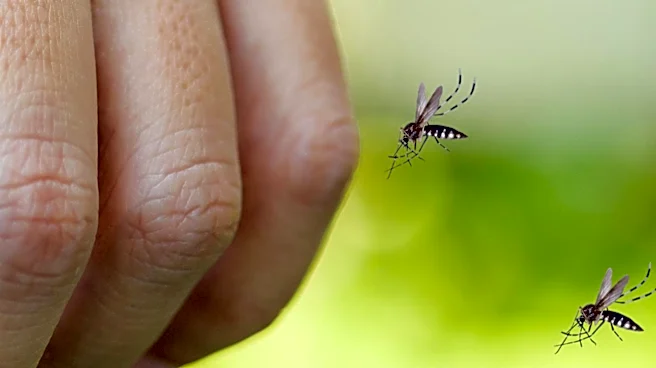
Mosquitoes are not indiscriminate in their biting habits; certain biological and lifestyle factors make some individuals more attractive to these insects than others. A study published in the Journal of Medical Entomology indicated that mosquitoes landed
on people with Type O blood nearly twice as often as those with Type A blood, suggesting that secretions indicating blood type play a role. Jonathan F. Day, an entomology professor at the University of Florida, notes that carbon dioxide (CO2) production is a primary cue, with individuals having higher metabolic rates, due to genetics or other factors, emitting more CO2 and thus being more attractive. Secondary cues, such as lactic acid released through the skin during exercise, also signal to mosquitoes that a person is a viable target. Additionally, mosquitoes use visual cues, preferring dark clothing that contrasts with the horizon, and tactile cues like body heat, with those running warmer being more prone to bites. Lifestyle choices, including alcohol consumption and physical activity, also increase attractiveness to mosquitoes, as highlighted by dermatologist Melissa Piliang.
Why It's Important?
Understanding why mosquitoes prefer certain individuals has significant public health implications, particularly in the U.S. where mosquito-borne diseases like West Nile virus and Zika virus are concerns. By identifying the factors that increase a person's attractiveness to mosquitoes, public health campaigns can develop more targeted and effective prevention strategies. For instance, advising individuals with Type O blood, higher metabolic rates, or those engaging in outdoor activities involving alcohol consumption to take extra precautions could reduce disease transmission rates. This knowledge can also inform the development of more effective personal repellents and community-level interventions. Furthermore, it underscores the importance of personal protective measures, such as wearing light-colored clothing and using DEET-based repellents, especially during peak mosquito activity times like sunrise and sunset. The economic impact of mosquito-borne illnesses, including healthcare costs and lost productivity, could be mitigated by reducing bite incidents through informed prevention.
What's Next?
Individuals can immediately implement preventive measures based on this information. Avoiding peak mosquito activity times (sunrise and sunset), wearing long, light-colored clothing, and using DEET-based repellents are highly recommended. The U.S. Centers for Disease Control and Prevention (CDC) guidelines for repellent application, especially for children, should be followed. While natural repellents like citronella candles lack scientific backing, using fans to create air movement can deter mosquitoes. For those who do get bitten, over-the-counter anti-itch creams with hydrocortisone and oral antihistamines can alleviate symptoms. Continued research into mosquito attractants could lead to advanced repellent technologies or even methods to alter human attractiveness to mosquitoes. Public health organizations are likely to continue emphasizing these personalized prevention strategies in their advisories to reduce the incidence of mosquito bites and associated diseases.
Beyond the Headlines
The selective nature of mosquito biting extends beyond mere annoyance, touching upon deeper biological and ecological principles. The interplay of genetics, metabolism, and even microbial skin communities contributes to an individual's unique 'scent profile' that mosquitoes detect. This complexity highlights the evolutionary arms race between humans and disease vectors, where mosquitoes have evolved sophisticated sensory systems to locate hosts. The findings also raise ethical considerations regarding personalized health advice and potential discrimination based on biological predispositions to mosquito bites. Long-term, this research could contribute to novel vector control strategies, such as genetic modification of mosquitoes or the development of 'lure and kill' traps that mimic human attractants. The broader implication is a shift towards more personalized and biologically informed approaches to public health, moving beyond one-size-fits-all solutions to address the nuanced interactions between humans and their environment.