
What's Happening?
The U.S. Agency for International Development (USAID) and the U.S. International Development Finance Corporation (DFC) represent two distinct yet complementary entities within the U.S. development landscape.
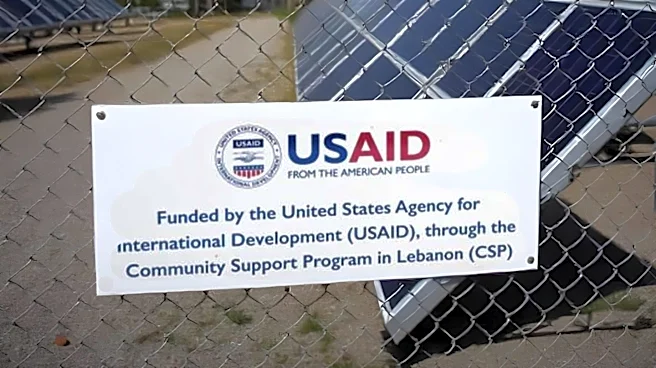
USAID, the primary federal agency for civilian foreign aid, focuses on humanitarian assistance, poverty reduction, and strengthening democratic governance through grants and concessional loans. Its success is measured by humanitarian outcomes and progress toward long-term development goals. In contrast, DFC, established in 2019, operates as a development finance institution. It mobilizes private capital for development projects using loans, equity, and political risk insurance, with a mandate to generate financial returns while advancing U.S. foreign policy and national security objectives. DFC's approach is market-based, requiring commercial viability and a path to profitability for its projects. While USAID addresses market failures in fragile states, DFC targets countries with strategic U.S. interests where its investment model can function, often working with large private sector developers. The former DFC CEO Adam Boehler emphasized this difference, stating, 'We are not a charity; we are an investment fund.'
Why It's Important?
The distinction between USAID and DFC is crucial for understanding the evolving U.S. approach to global development and its strategic implications. USAID's traditional role in providing humanitarian aid and fostering stability in vulnerable regions is vital for addressing immediate crises and building foundational infrastructure, which can de-risk markets for future investment. DFC's focus on leveraging private capital signifies a shift towards a more financially sustainable and strategically driven development model. This dual approach allows the U.S. to project influence and support global growth through both welfare-oriented aid and strategic economic investments. The synergy between these agencies is important; USAID's work can create the stable environments necessary for DFC's investments to thrive. This integrated strategy is particularly relevant in the context of increasing global competition for influence, especially from state-backed development banks from countries like China, as it allows the U.S. to blend financial acumen with geopolitical strategy.
What's Next?
The future of U.S. development policy will likely involve continued efforts to coordinate and integrate the distinct mandates of USAID and DFC. While their operational models differ, their overarching goals of promoting stability and prosperity align. Discussions will continue on how USAID's grant-making and capacity-building efforts can further de-risk markets, making them more attractive for DFC's private sector investments. This coordination is essential to maximize the impact of U.S. capital and ensure that development initiatives are both effective and sustainable. As global challenges evolve, there may be further refinement of their roles and increased emphasis on projects that demonstrate both social impact and financial viability. The ongoing tension between the non-profit mandate of aid and the profit requirement of investment will remain a key consideration in shaping future U.S. development strategies.
Beyond the Headlines
The operational differences between USAID and DFC highlight a broader philosophical debate within international development: the balance between humanitarian aid and strategic investment. USAID embodies the principle of aid as a moral imperative and a tool for diplomacy, focusing on human well-being and democratic values. DFC, on the other hand, represents a more pragmatic, market-driven approach, viewing development as a means to advance U.S. economic and security interests. This dual strategy reflects a recognition that traditional aid alone may not be sufficient to address complex global challenges or compete with the influence of other global powers. The ethical implications of tying development assistance to financial returns and strategic interests are a significant consideration, as it can influence which projects are prioritized and which populations are served. This evolving landscape also raises questions about the long-term sustainability of development efforts and the potential for private sector involvement to either exacerbate or alleviate inequalities.