






What's Happening?
The United States, Japan, and South Korea have signed a Memorandum of Cooperation to jointly export small modular reactors (SMRs) across the Indo-Pacific region. This agreement, while ostensibly focused on energy, is a strategic response to China's expanding
influence through civil nuclear exports. China is actively extending its reach by building nuclear reactors in various countries, creating long-term relationships through fuel supplies, financing, maintenance, technical standards, and political ties. The U.S., Japan, and South Korea recognize that exporting nuclear power plants is not merely about infrastructure development but about securing long-term geopolitical influence. This trilateral partnership aims to offer an alternative to Chinese and Russian nuclear energy projects, which are seen as tools for extending their strategic power.
Why It's Important?
This trilateral initiative is crucial for U.S. strategic interests in the Indo-Pacific, as it directly addresses China's growing geopolitical influence. By offering SMRs, the U.S. and its allies aim to provide countries in the region with a reliable and secure energy option that does not come with the geopolitical strings often attached to Chinese or Russian projects. This move can help counter China's 'debt-trap diplomacy' and ensure that critical infrastructure development aligns with democratic values and international norms. For U.S. industries, this opens up new markets for advanced nuclear technology, fostering innovation and creating economic opportunities. It also strengthens alliances with Japan and South Korea, enhancing regional stability and collective security. The success of this partnership could set a precedent for future collaborations in other strategic sectors, reinforcing a rules-based international order.
What's Next?
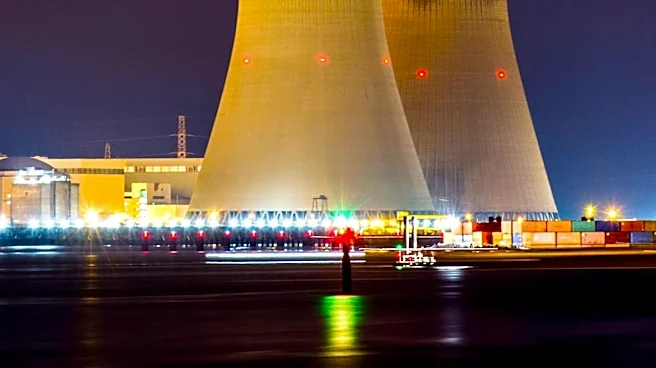
The immediate next steps will involve the development of concrete plans for identifying potential recipient countries and structuring financing and technical support packages for SMR exports. The three nations will need to coordinate their regulatory frameworks and ensure interoperability of their SMR technologies to present a unified and attractive offering. There will likely be a push to showcase the economic and environmental benefits of SMRs, including their smaller footprint, enhanced safety features, and potential for faster deployment compared to traditional nuclear power plants. China and Russia are expected to react to this initiative, potentially by intensifying their own nuclear export efforts or by offering more competitive terms to potential clients. The success of this partnership will depend on its ability to deliver cost-effective and reliable SMR solutions that can genuinely compete with existing options.
Beyond the Headlines
The deeper implication of this initiative lies in the recognition that national security in the 21st century extends beyond military alliances to include critical infrastructure and technological leadership. The competition for influence in the Indo-Pacific is not just about naval presence but also about who builds and controls the foundational elements of a nation's economy, such as energy grids. By focusing on SMRs, the U.S., Japan, and South Korea are investing in a technology that could revolutionize energy production and provide a sustainable, low-carbon alternative to fossil fuels. This also highlights a shift in strategic thinking, where economic and technological cooperation are increasingly viewed as integral components of national security. The ethical dimension involves ensuring that nuclear technology is transferred responsibly, with robust safeguards against proliferation and adherence to the highest safety standards, preventing its misuse or accidental release.