






What's Happening?
The Main Directorate of Intelligence of the Ministry of Defense of Ukraine (HUR) has released information detailing 30 units of foreign-made technological equipment used by Russian enterprises to manufacture ballistic missiles and their components. This
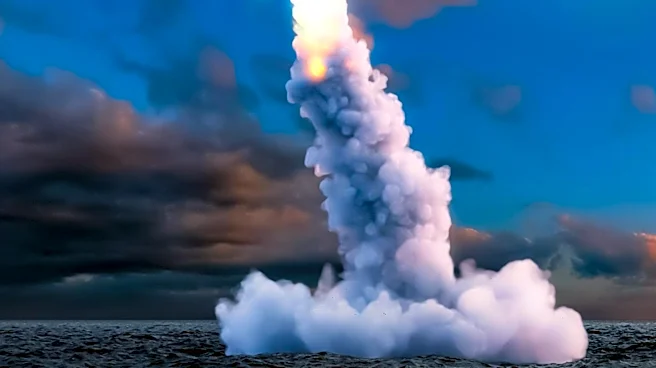
data, published on the War&Sanctions portal, indicates that despite sanctions, Russia's military-industrial complex continues to rely on foreign technologies. The equipment originates from China, Germany, Taiwan, the United States, Turkey, Switzerland, and Italy. These machines are crucial for producing missiles like the Iskander-M, Kh-47M2 Kinzhal, and Zircon, as well as their sub-assemblies such as altimeters, aerodynamic control surfaces, and gyroscopes. HUR specifically noted an increase in Chinese machine tools, including five-axis machining centers, which themselves depend on European, Japanese, and Taiwanese components.
Why It's Important?
This intelligence highlights Russia's persistent dependence on imported high-precision industrial tooling, indicating its inability to produce competitive domestic substitutes. The reliance on a global supply chain, even for Chinese-made machinery that incorporates Western components, reveals a significant vulnerability in Russia's military-industrial complex. This situation complicates the effectiveness of sanctions, as components can be routed through third countries. The continued production of advanced ballistic missiles, enabled by this foreign technology, poses an ongoing threat to Ukraine and global security. The findings underscore the need for more comprehensive and coordinated international efforts to control the flow of dual-use technologies and components that can be diverted to military applications.
What's Next?
Ukrainian intelligence is advocating for stronger international controls over the supply of industrial equipment and components to curb Russia's weapon production capabilities. This includes rigorous checks on end-users, monitoring the actual locations where equipment is used, controlling the supply of spare parts, software, and consumables, and conducting regular audits of distributors and intermediaries. Furthermore, HUR proposes restricting the supply of numerical control systems, tools, and other components to Chinese manufacturers whose equipment is known to be delivered to Russian defense industry enterprises. These proposed measures aim to disrupt the intricate supply chains that sustain Russia's missile manufacturing, potentially impacting its ability to conduct future ballistic strikes and forcing a re-evaluation of global export control policies.
Beyond the Headlines
The exposure of foreign equipment in Russian missile production facilities raises profound questions about the efficacy of current international sanctions regimes and the ethical responsibilities of global manufacturers. It reveals a complex web of interdependence where components from various nations can ultimately contribute to military aggression. This situation could lead to a re-evaluation of how 'dual-use' technologies are classified and controlled, potentially expanding the scope of export restrictions to include a wider range of components and sub-assemblies. It also highlights the challenge of monitoring and enforcing sanctions in a globalized economy, where supply chains are often opaque. The long-term implications could include increased pressure on companies to conduct more thorough due diligence on their customers and supply chains, and a push for greater international cooperation to prevent the diversion of critical technologies to military purposes by sanctioned entities.