





What's Happening?
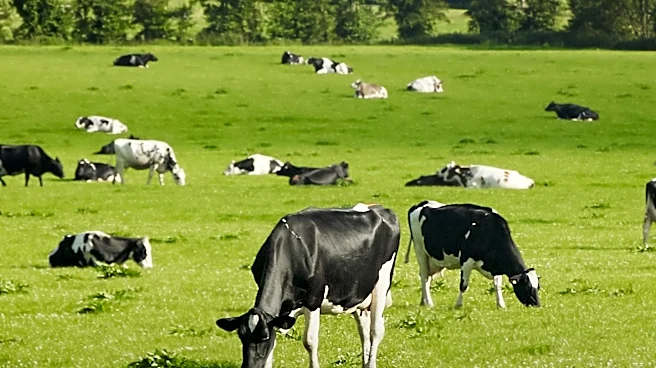
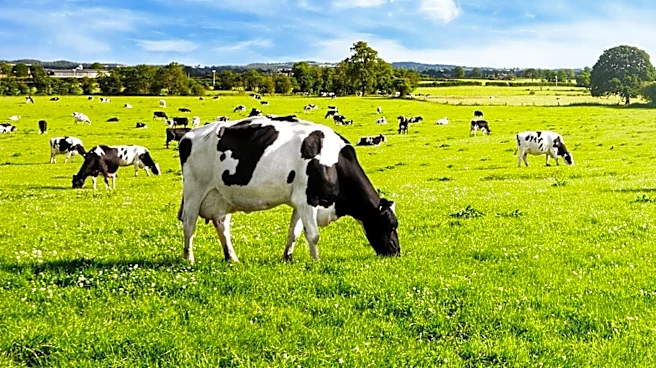
The USDA's latest cattle inventory report indicates that the U.S. cattle herd has stopped shrinking, with 94.2 million head of cattle and calves recorded as of July 1. This marks the first increase since 2018, with beef replacement heifers climbing by
3%. However, the number of beef cows has decreased by 1% from the previous year, and the calf crop is the smallest since 1941. The report also highlights a 2% increase in cattle on feed, totaling 13.2 million head. Despite these changes, the overall supply of feeder cattle remains tight, suggesting potential challenges for beef supply through 2028.
Why It's Important?
The stabilization of the U.S. cattle herd is significant for the beef industry, which has faced supply constraints and rising prices. The increase in cattle on feed suggests that while immediate supply may improve, the long-term outlook remains uncertain due to the small calf crop. This could lead to tighter beef supplies and higher prices, impacting consumers and the food industry. Additionally, the report's findings may influence market dynamics, with potential implications for cattle futures and pricing strategies. The data also underscores the ongoing challenges in balancing herd management with market demands.
What's Next?
As the cattle industry adjusts to these new dynamics, stakeholders will be closely monitoring market trends and pricing. The USDA's future reports will be critical in assessing the long-term impact on beef supply and pricing. Industry players may need to explore strategies to increase herd sizes sustainably, while also addressing environmental and economic factors. The potential for tighter supplies could lead to increased imports or alternative protein sources gaining market share. Policymakers and industry leaders will need to collaborate to ensure a stable and sustainable beef supply chain.