







What's Happening?
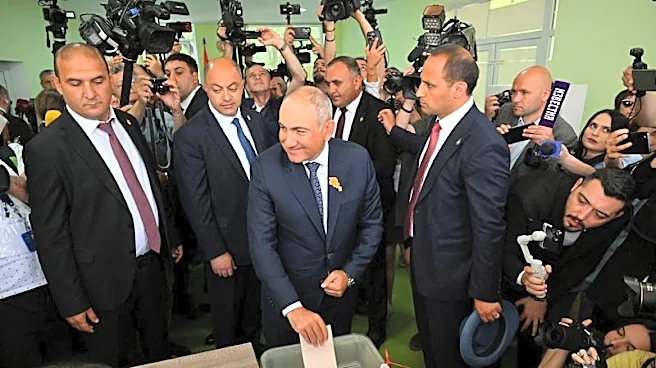
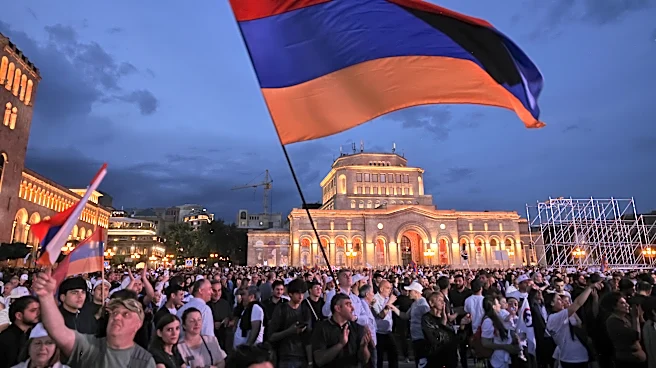
Armenia is holding a pivotal election that could determine its geopolitical alignment, either moving closer to the European Union and the West or remaining within Russia's sphere of influence. Prime Minister Nikol Pashinyan, who has been in power since
2018, is seeking a strong mandate for his Civil Contract party to continue shifting Armenia away from Moscow. The election is being closely monitored by both Brussels and Moscow due to Armenia's strategic importance in the South Caucasus. Pashinyan has expressed intentions to strengthen ties with the EU, while maintaining that Armenia is not in conflict with Russia. However, his pro-Russian opponents, including the Strong Armenia party led by Samvel Karapetyan, argue that Pashinyan's policies could lead to confrontation with Russia.
Why It's Important?
The outcome of this election holds significant implications for Armenia's foreign policy and its economic future. A shift towards the EU could enhance Armenia's democratic reforms and economic ties with the West, potentially leading to increased investment and development. However, it risks straining relations with Russia, which has historically been a major trade partner and security ally. Russia's recent import bans on Armenian goods are seen as a warning against moving too close to the West. The election also impacts regional stability, particularly in light of Armenia's recent conflicts with Azerbaijan over Nagorno-Karabakh. Pashinyan's efforts to reconcile with Azerbaijan could foster peace but are controversial domestically.
What's Next?
If Pashinyan secures a strong victory, Armenia may accelerate its integration with the EU, potentially leading to economic reforms and increased Western influence. However, this could provoke further economic and political pressure from Russia, which may retaliate by leveraging its control over Armenia's energy and infrastructure sectors. The election results will also influence Armenia's approach to its neighbors, including Turkey and Iran, and its ongoing peace process with Azerbaijan. The international community, particularly the EU and the U.S., will likely continue to support Armenia's democratic aspirations, while Russia may seek to reinforce its influence through economic and diplomatic means.
Beyond the Headlines
The election underscores the broader geopolitical struggle between Russia and the West for influence in post-Soviet states. Armenia's decision could set a precedent for other countries in the region considering a pivot towards the EU. The situation also highlights the challenges of balancing national sovereignty with external pressures from powerful neighbors. Domestically, the election raises questions about democratic governance and human rights, as Pashinyan's administration faces criticism for alleged authoritarian practices. The international community will be watching closely to see how Armenia navigates these complex dynamics.