



What's Happening?
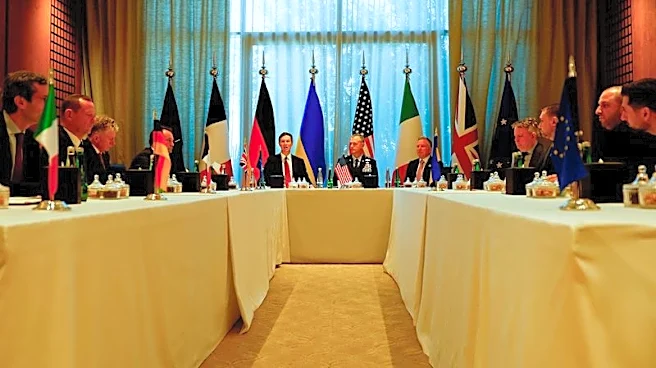
Trilateral discussions involving Ukraine, Russia, and the United States commenced in Abu Dhabi, United Arab Emirates, marking the first such meeting since February. The primary objective of these talks is to reignite negotiations and foster progress towards
a peace agreement between Kyiv and Moscow. Sheikh Abdullah bin Zayed Al Nahyan, the Vice Prime Minister and Minister of Foreign Affairs of the UAE, welcomed the delegations, expressing hope for a peaceful and diplomatic resolution to the conflict. He acknowledged President Trump, Russian President Vladimir Putin, and Ukrainian President Volodymyr Zelensky for their trust in the UAE's mediation efforts. U.S. negotiators Jared Kushner and Steve Witkoff were also commended for their contributions. The talks are scheduled to continue over two days, November 10th and 11th. Vladimir Medinsky leads the Russian delegation, while Kushner and Witkoff represent Washington.
Why It's Important?
The resumption of trilateral talks in Abu Dhabi signifies a critical diplomatic push to de-escalate the ongoing conflict between Ukraine and Russia. The involvement of the United States underscores the international community's commitment to finding a peaceful resolution, potentially impacting global stability and energy markets. A successful outcome could lead to a new security framework in Europe, as suggested by Jared Kushner, aiming to prevent future conflicts and redefine geopolitical alliances. Conversely, a failure to reach a consensus could prolong the conflict, exacerbating humanitarian crises and maintaining economic uncertainties. The talks also highlight the growing diplomatic influence of the UAE as a neutral mediator in complex international disputes, potentially shifting regional power dynamics.
What's Next?
The discussions in Abu Dhabi are set to continue through November 11th, with a focus on shaping a new continental security system and creating a comprehensive security architecture for Europe. According to a Russian delegation source, Ukraine is considered one element within this broader security debate. Jared Kushner indicated that the negotiations aim to move beyond merely ending hostilities to establish a lasting security framework between Russia, Ukraine, and Europe. The outcomes of these talks will likely influence future diplomatic engagements and could set the stage for more formal peace negotiations. Reactions from political leaders, international organizations, and financial markets will be closely monitored as the discussions unfold.
Beyond the Headlines
The emphasis on a 'new continental security system' and a 'comprehensive and indivisible security architecture' suggests a potential re-evaluation of post-Cold War security arrangements in Europe. This could lead to significant shifts in military alliances, defense spending, and international treaties. The inclusion of Ukraine as 'only one element' in a broader security discussion indicates that the talks might address deeper geopolitical issues beyond the immediate conflict. The ethical implications of brokering peace, particularly concerning territorial integrity and national sovereignty, will be a central challenge. The long-term success of any agreement will depend on the willingness of all parties to adhere to new frameworks and address underlying grievances, potentially reshaping the geopolitical landscape for decades.