






What's Happening?
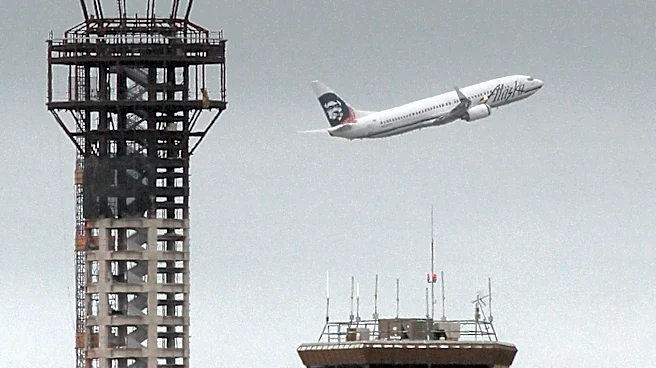
Mankato Regional Airport has received an $11.5 million grant from the Federal Aviation Administration (FAA), bringing the airport closer to constructing a long-sought air traffic control tower. This grant is part of a larger $1.1 billion nationwide airport funding
initiative announced by the Department of Transportation. Approximately $10 million of the grant is specifically allocated for the control tower, with the remaining $1.5 million designated for taxiway improvements. This new funding increases Mankato's total secured airport grants to $29.6 million for a project now estimated at $31.6 million. Despite the significant federal contribution, a $2.1 million funding gap remains, which officials plan to address through additional FAA grant programs. U.S. Representative Brad Finstad previously sought $3.5 million in FY26 funding for the airport, and the Minnesota Legislature authorized $1.26 million in state funding for the tower project. Mankato Regional Airport is currently the busiest airport in Minnesota without a control tower, handling approximately 126,000 takeoffs and landings annually and serving about 105 based aircraft in 2025.
Why It's Important?
The construction of an air traffic control tower at Mankato Regional Airport is crucial for enhancing safety and operational efficiency at what is currently Minnesota's busiest uncontrolled airport. The airport's high traffic volume is largely due to Minnesota State University, Mankato's aeronautics program, which enrolls over 700 students and uses the airport as its primary training base. The absence of a control tower means pilots rely on flight plans and self-announced radio communications, which can pose challenges in managing high traffic. A control tower will provide direct air traffic control, significantly improving safety for airport users and the region. Economically, the airport has a substantial local footprint, estimated at $23.8 million, and supports approximately 214 regional jobs. The upgrade will also bolster the university's aeronautics program, which is a major contributor to the local economy and a significant employer, with its flight school employing 205 people, including 91 instructors. This investment underscores the federal government's commitment to upgrading airport infrastructure and enhancing runway safety nationwide.
What's Next?
With the $11.5 million FAA grant secured, Mankato Regional Airport officials are now focused on closing the remaining $2.1 million funding gap, potentially through additional FAA grant programs. U.S. Transportation Secretary Sean Duffy indicated that the broader investment includes vehicle transmitters to improve air traffic controllers' visibility, suggesting a comprehensive approach to air safety. City Manager Susan Arntz expressed optimism that construction on the control tower could commence in the spring, with a target completion date in spring 2029. This timeline is a revision from an earlier projection of operational status by 2027. The new tower is planned as a contract facility, meaning it will be operated by a private company under FAA oversight, a common model for smaller, lower-activity airports. This approach requires the airport to demonstrate a benefit-to-cost ratio of at least 1.0 to qualify for the program. The completion of the tower is expected to allow for programmatic adjustments within Minnesota State University, Mankato's aeronautics program.
Beyond the Headlines
The development of a control tower at Mankato Regional Airport highlights a broader trend in regional airport infrastructure development, where federal and state funding are critical for enhancing safety and supporting local economic drivers. The reliance on a contract tower model reflects the FAA's strategy to manage air traffic control services efficiently at smaller airports, balancing safety needs with operational costs. This project also underscores the significant role of educational institutions, like Minnesota State University, Mankato's aeronautics program, in driving airport traffic and economic activity. The success of such programs often necessitates robust infrastructure to support training and operations. The ongoing challenge of securing full funding for such projects, even with substantial federal grants, points to the complex financial landscape of airport development. Furthermore, the shift from pilot self-communication to controlled air traffic management represents a fundamental improvement in aviation safety protocols, aligning regional airports with national safety standards and potentially attracting more diverse aviation activities.