






What's Happening?
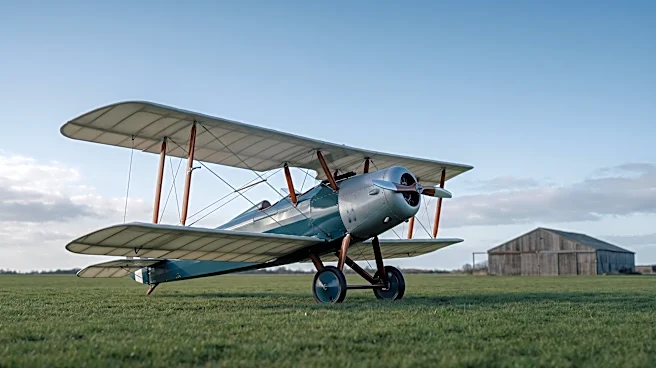
Bernard Henri Barny de Romanet, a French fighter ace from World War I with 18 aerial victories, continued his passion for aviation after the war, transitioning into competitive flying. In 1920, he twice broke the world airspeed record, showcasing his exceptional
piloting skills beyond military combat. However, his dedication to flight ultimately led to his demise. On September 23, 1921, while testing his race aircraft for the upcoming 1921 Coupe Deutsch de la Meurthe, de Romanet was killed in a flying accident. The cause of the crash was attributed to the fabric detaching from the aircraft's wing. His career began in October 1913 when he joined the French army, serving in cavalry and infantry regiments before transferring to the French Air Service in July 1915. He received his Pilot’s Brevet in January 1916 and was initially posted as a reconnaissance pilot. After specialized fighter training, he was reassigned to N37 in February 1917, flying single-seater Nieuport fighters. His first victory occurred on May 3, 1917, earning him a Médaille Militaire. He became an ace in June 1918 and commanded Escadrille 167, achieving 18 victories by October 1918. For his WWI efforts, he was awarded the Chevalier de la Légion d’honneur.
Why It's Important?
The story of Bernard Henri Barny de Romanet highlights the significant transition many WWI aviators faced after the conflict, moving from military service to civilian pursuits, often in the burgeoning field of aviation. His record-breaking achievements in airspeed demonstrated the rapid advancements in aircraft technology and piloting techniques during the early 20th century. This period was crucial for the development of aviation, as former military pilots pushed the boundaries of what was possible, contributing to both the sport and the engineering of flight. His tragic death also underscores the inherent dangers and experimental nature of early aviation, where the pursuit of speed and performance often came at a high cost. The risks taken by individuals like de Romanet, while sometimes fatal, were instrumental in gathering critical data and inspiring innovations that would eventually make air travel safer and more efficient. His legacy, therefore, is not just one of a war hero but also of a pioneer who contributed to the evolution of aviation through his competitive spirit and daring endeavors.
What's Next?
While Bernard Henri Barny de Romanet's story is historical, it serves as a poignant reminder of the sacrifices made by early aviation pioneers. The advancements and lessons learned from such incidents contributed to the ongoing development of aviation safety protocols and aircraft design. In contemporary terms, the continuous pursuit of speed and performance in aviation, whether in military or civilian contexts, still involves rigorous testing and safety measures, often building upon the foundational experiences of figures like de Romanet. The aviation industry continues to evolve, with new technologies and designs constantly being introduced, each requiring extensive testing to ensure safety and performance. The spirit of pushing boundaries, while now supported by advanced engineering and safety standards, echoes the pioneering efforts of early aviators.
Beyond the Headlines
De Romanet's story reflects a broader cultural fascination with aviation in the post-WWI era, where pilots were often seen as heroes and innovators. This period saw the public's imagination captured by daring feats of flight, which in turn fueled investment and interest in the nascent aviation industry. The transition from military combat to competitive sports aviation also illustrates how skills honed in warfare could be repurposed for civilian achievements, contributing to technological progress. His death, while tragic, was part of a larger narrative of risk and reward that characterized the early days of flight, shaping public perception and influencing the regulatory frameworks that would eventually govern air travel. The pursuit of records, even at personal peril, was a testament to the human drive for exploration and mastery over new frontiers, leaving a lasting impact on the development of modern aviation.