




What's Happening?
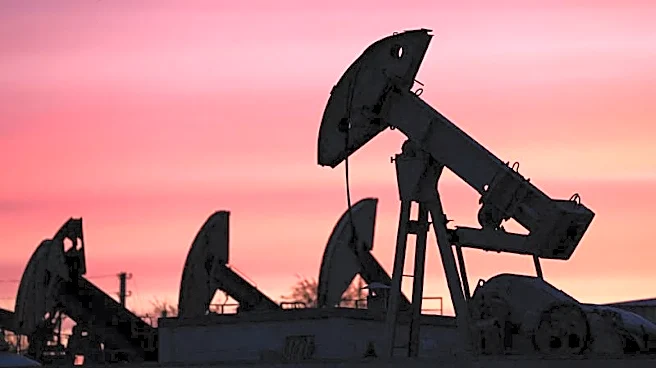
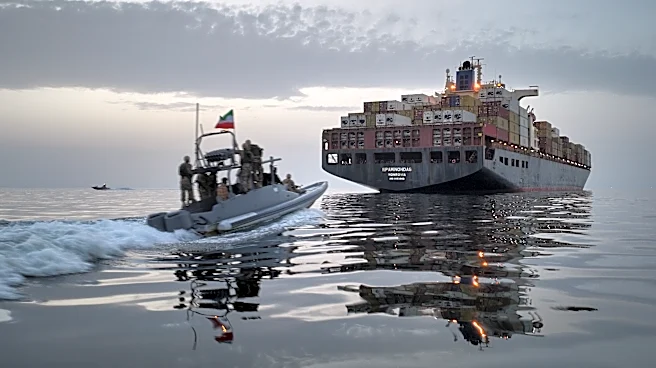
President Trump has declared the U.S. blockade of Iranian ports a success, urging Iran to 'give up' as tensions over the Strait of Hormuz continue. The blockade has led to a significant rise in global oil prices, with Brent crude surpassing $120 a barrel.
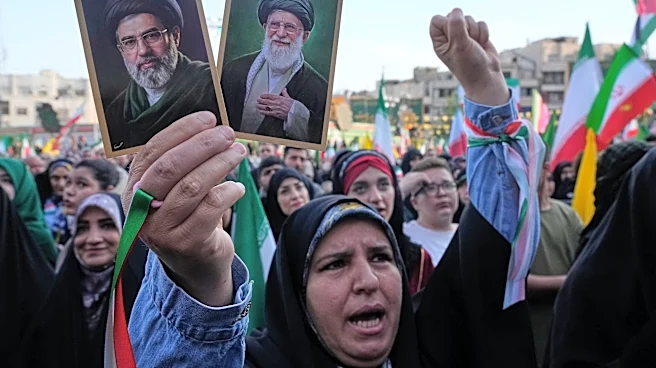
Iran's President Masoud Pezeshkian criticized the blockade, stating it violates international law and is destined to fail. Meanwhile, diplomatic efforts are ongoing, with Russian President Vladimir Putin advising Trump to maintain the ceasefire. The U.S. and Iran remain at odds over several issues, including Iran's nuclear program and the release of Iranian assets.
Why It's Important?
The blockade and rising tensions have significant implications for global oil markets, contributing to higher fuel prices and economic strain, particularly in regions heavily reliant on Middle Eastern oil. The situation also affects geopolitical dynamics, with OPEC in crisis mode and potential shifts in U.S. military presence in Europe. The ongoing conflict and economic measures are part of a broader strategy to pressure Iran into negotiations, but they also risk further destabilizing the region and impacting global economic stability.
What's Next?
The U.S. is preparing for a prolonged blockade to compel Iran to abandon its nuclear ambitions. Diplomatic negotiations are expected to continue, with potential adjustments in military strategies and alliances. The international community will be closely watching for any shifts in U.S. policy or Iranian responses that could alter the current trajectory of the conflict.