



What's Happening?
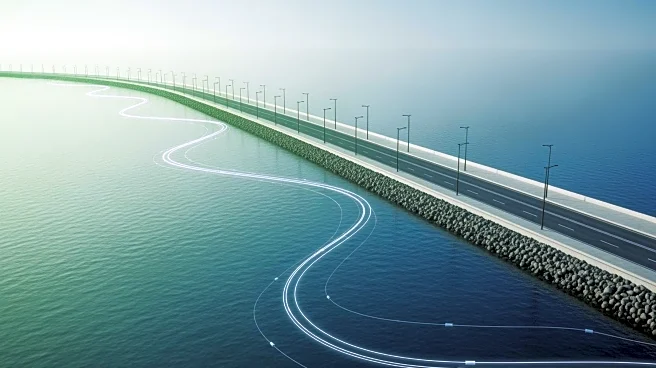
The North Sea Boulevard and Maasvlakte Boulevard have reopened to traffic following the installation of high-voltage cables by TenneT for two offshore wind farms, IJmuiden Ver Beta and IJmuiden Ver Gamma. The cables, installed by contractor NRG, are buried
in the seabed along the road, facilitating the future arrival of green energy onshore. This energy will be distributed to industry via new converter stations and the Amaliahaven transformer station, contributing to the reduction of CO₂ emissions from the Rotterdam port area, which accounts for 16% of total Dutch emissions. The installation involved drilling under dunes to place conduits for the cables, which will be fully operational by 2026.
Why It's Important?
The reopening of the North Sea Boulevard marks a significant step in advancing green energy infrastructure in the Netherlands. The installation of offshore wind farm cables is crucial for reducing carbon emissions and promoting sustainable energy solutions. This development supports the country's commitment to environmental sustainability and the transition to renewable energy sources. The project not only aids in reducing emissions but also sets a precedent for future green energy initiatives, potentially influencing similar projects globally.
What's Next?
With the cables installed, the next phase involves connecting the offshore wind farms to the grid, expected to be completed by 2026. This will enable the distribution of green energy to industries, further reducing emissions. The project may inspire other countries to invest in similar infrastructure, promoting global efforts towards renewable energy. Stakeholders, including environmental groups and industry leaders, are likely to monitor the project's progress and its impact on emission reduction.