







What's Happening?
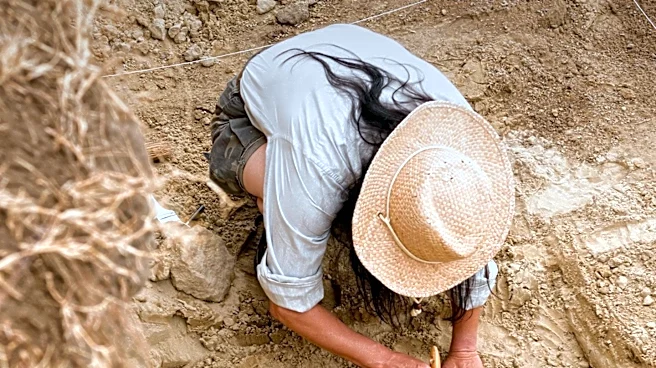
A fragment of a human skull dating back over 200,000 years has been discovered in Ciudad Real, Spain, adding complexity to the understanding of human evolution. This find is significant due to the scarcity of human remains from this period in Europe,
a crucial time when early humans with large, complex brains, such as Homo sapiens and Neanderthals, emerged. The skull's features suggest a more primitive human, complicating the evolutionary timeline and challenging existing theories about the development of modern humans and their ancestors.
Why It's Important?
The discovery of this ancient skull fragment is pivotal for paleoanthropologists and evolutionary scientists as it provides new insights into the diversity and development of early human species. It challenges the linear progression model of human evolution, suggesting a more complex scenario with various human forms evolving at different rates. This could reshape current understanding of how modern humans and Neanderthals evolved and interacted, potentially leading to new theories about human ancestry and migration patterns.
What's Next?
Further excavations and studies are expected at the Ruidera site to uncover more fossils and artifacts that could provide additional context and clarity on the evolutionary timeline. Researchers will likely conduct detailed analyses of the skull fragment and surrounding materials to better understand the environmental and biological factors influencing human evolution during this period. The findings could prompt a reevaluation of existing evolutionary models and stimulate new research into the origins and development of early human species.