




What's Happening?
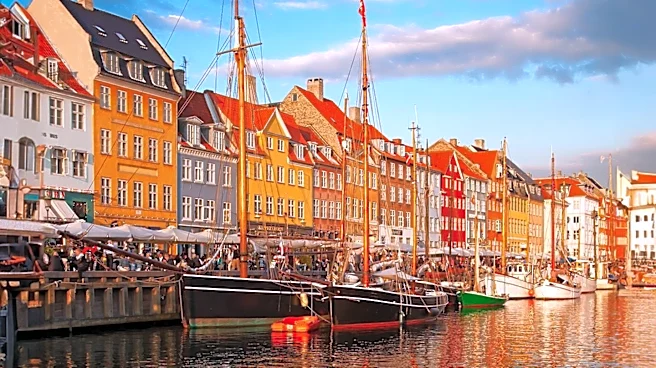
Copenhagen, the capital of Denmark, is recognized as a significant cultural and economic center in Northern Europe, home to over 1.3 million people in its metropolitan area. The city is celebrated for its iconic landmarks, including the Little Mermaid
statue, Tivoli Gardens, and the vibrant Nyhavn harbor. Beyond its historical attractions, Copenhagen boasts a thriving food scene, innovative architecture, and a strong commitment to sustainability. The city actively preserves its rich history, dating back to the Viking Age, while also pursuing ambitious climate goals and green initiatives. Major infrastructure projects, such as the Metro expansion and the Lynetteholmen artificial island, are underway, reflecting its continuous urban development. Copenhagen also hosts a variety of events and festivals throughout the year, including the Copenhagen Jazz Festival and Copenhagen Pride, contributing to its dynamic cultural landscape.
Why It's Important?
Copenhagen's strategic focus on sustainability and urban development positions it as a model for other global cities. Its commitment to green initiatives and ambitious climate goals can inspire U.S. cities to adopt similar policies, potentially fostering innovation in renewable energy and sustainable infrastructure. The city's success in blending historical preservation with modern architectural advancements offers valuable lessons for urban planners and developers in the U.S. seeking to revitalize older districts while promoting contemporary design. Furthermore, Copenhagen's vibrant cultural scene and robust tourism sector highlight the economic benefits of investing in arts, festivals, and public spaces, which could inform U.S. strategies for local economic growth and cultural enrichment. The ongoing infrastructure projects also demonstrate how significant public investments can drive economic activity and improve quality of life, providing a blueprint for large-scale urban projects in the United States.
What's Next?
Copenhagen is expected to continue its trajectory of urban development and sustainability efforts. The ongoing Metro expansion and the Lynetteholmen artificial island project will likely transform the city's infrastructure and landscape further. The Copenhagen City Council will continue to make decisions impacting the city's diverse communities and neighborhoods, with a focus on maintaining its cultural vibrancy and commitment to green living. Visitors and residents can anticipate a packed calendar of events and festivals, reinforcing Copenhagen's status as a cultural hub. The city's efforts to integrate modern living with historical preservation will likely continue, setting precedents for future urban planning. Additionally, the city's response to events like the Old Stock Exchange fire and its aftermath will be closely watched as it rebuilds and reinforces its historical assets.
Beyond the Headlines
Copenhagen's dedication to sustainability extends beyond mere policy, embedding itself into the city's cultural identity and daily life. This holistic approach, where green technologies and practices are integrated into urban planning and public consciousness, offers a profound example of how environmental stewardship can become a core societal value. The city's ability to balance rapid modernization with the preservation of its historical heritage, such as its Viking Age roots and iconic landmarks, speaks to a deeper understanding of identity and progress. This blend creates a unique urban experience that is both forward-looking and deeply rooted in its past. The emphasis on public spaces, cultural events, and a high quality of life also reflects a societal priority on well-being and community, suggesting a model where economic growth is harmonized with social and environmental health.